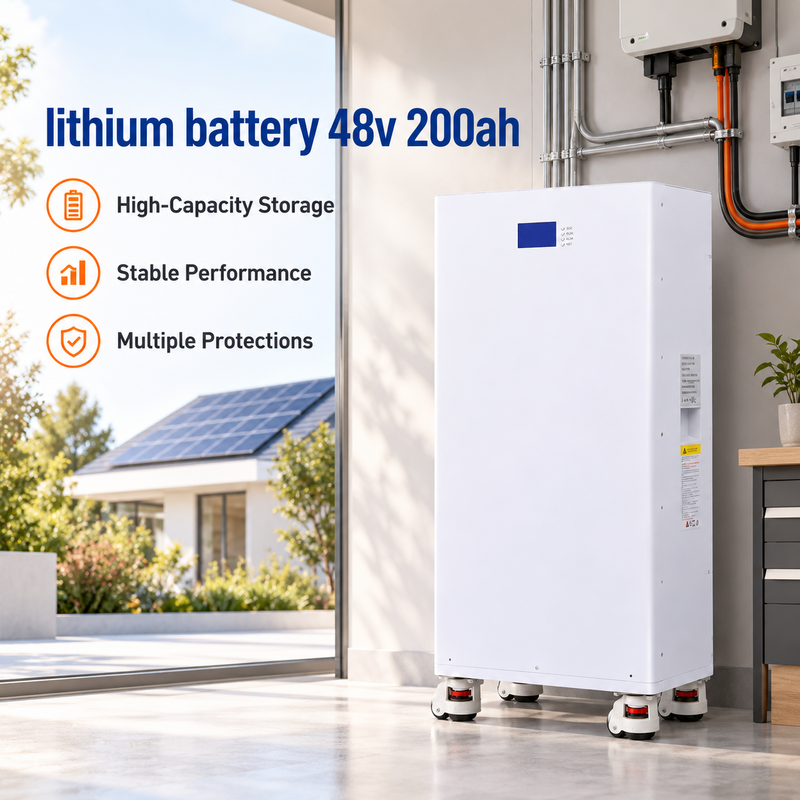
Quality Guide for 48V 200Ah Lithium Batteries

5,000+ units ready stock, 1–5 days fast global delivery

application/lithium-battery-48v-200ah, application/lithium-battery-48v-200ah, 
Inquiry
Inquiry

lithium battery 48v 200ah

Lithium batteries, specifically the 48V  200Ah models, are increasingly vital for various applications, including solar  energy  storage, RV  usage, and uninterruptible power supplies (UPS). As a  purchasing  manager  or  product manager, understanding  the  quality  and reliability of these batteries is essential  for  operational efficiency and safety. This article will  guide you  through evaluating lithium battery  options, sourcing reliable suppliers, considering cost  factors, addressing common issues, and  understanding the advantages  of  LiFePO4 technology.

Where to Source Reliable Wholesale Suppliers for Lithium Batteries

Where to Source Reliable Wholesale Suppliers for Lithium Batteries

Sourcing reliable wholesale suppliers for 48V 200Ah lithium batteries involves several steps. First, leverage industry networks and trade shows to  identify potential  suppliers. These platforms often showcase manufacturers with established reputations  in  the lithium battery  sector.

Second,  consider online marketplaces specializing in  industrial and commercial products, such as  Alibaba or Global Sources. When evaluating suppliers, prioritize those with  a proven track record, relevant certifications, and positive customer feedback.  It's  also beneficial to request  samples  before placing large orders to verify product  quality and performance.

Additionally, engage suppliers in discussions regarding their manufacturing processes, quality control  measures, and after-sales support.  This dialogue can  help you assess their commitment to quality and customer  satisfaction. Establishing a clear communication  channel is  vital for addressing any future concerns or customization needs.

Cost Factors to Consider When Purchasing 48V 200Ah Lithium Batteries

The cost of 48V 200Ah lithium batteries can  vary significantly based on several factors. First,  the manufacturing materials, particularly the type of lithium chemistry used,  impact pricing. LiFePO4 batteries  may have a  higher upfront cost  compared to other lithium options but often provide better  long-term value due to their longer lifespan and safety  features.

Second,  consider the scale of your order. Many manufacturers offer tiered pricing, where larger orders lead to lower unit costs. Be  aware of the minimum order quantities (MOQs) as well; understanding these can help you plan your purchases more  effectively.

Additionally, factor in shipping costs, lead  times,  and potential customs duties if importing from overseas. These aspects can significantly affect the  total cost of ownership. Lastly, evaluate  the total lifecycle costs,  including installation, maintenance, and  replacement, to  ensure you  are making a well-informed  purchasing decision.

Common Problems with Lithium Batteries and Effective Solutions

Lithium batteries, while generally reliable, can present specific  challenges that buyers should be aware of. One common issue is capacity fade, which occurs as  batteries age and  undergo numerous charge-discharge cycles. To mitigate this, ensure  you  choose batteries with  a high cycle life  rating and a robust BMS that can manage  the charging  process effectively.

Another issue is thermal  runaway, which can  lead to battery failure and safety hazards.  This risk can  be  minimized by ensuring proper ventilation and temperature control during operation and storage. Always check the manufacturer's guidelines on optimal operating conditions.

Lastly, be aware of potential compatibility issues with your existing  systems.  When integrating new batteries, consider  factors like voltage requirements, physical dimensions, and  connection  types. Testing the batteries in your specific application  before full-scale deployment can help identify and resolve compatibility issues early on.

Understanding the Advantages of LiFePO4 Material in Battery Technology

LiFePO4 (lithium iron phosphate) is a preferred material for 48V 200Ah lithium batteries due to  its numerous advantages. One of the most significant benefits is its thermal stability, which  reduces the risk of overheating and enhances safety during operation. This attribute  is  crucial for applications like solar energy  storage, where temperature fluctuations can occur.

Another advantage  is the  longevity of  LiFePO4 batteries. They typically  offer a cycle life of 2000 to 5000 cycles, significantly outlasting conventional lead-acid batteries. This longevity translates  to lower replacement costs and less frequent maintenance, making them a cost-effective solution in the  long run.

Furthermore, LiFePO4 batteries  exhibit a  flat discharge curve, meaning they maintain a consistent voltage level throughout their discharge cycle. This characteristic is beneficial for applications requiring  stable power output. Finally, LiFePO4 batteries  are environmentally friendly, as they do not contain  toxic heavy metals, making them a sustainable choice for energy storage solutions.

In  summary, the 48V 200Ah lithium battery market presents various opportunities and considerations  for B2B buyers. By understanding quality evaluation, sourcing strategies, cost factors, common issues, and the benefits of LiFePO4  technology, purchasing managers and product leaders can  make informed decisions that enhance operational efficiency and safety.

How to Evaluate the Quality of 48V 200Ah Lithium Batteries

When assessing  the quality of 48V  200Ah lithium batteries, several key factors should be taken into account. First, consider the  battery's chemistry; lithium iron phosphate (LiFePO4) batteries  are known  for  their thermal stability, safety, and long cycle life compared to other lithium chemistries.  Look for certifications such as UN38.3 and CE,  which indicate that the batteries meet international safety and performance standards.

Next, review the  technical specifications, including capacity, discharge rates, and cycle life. A higher cycle life  indicates a longer lifespan, which is crucial for applications  requiring frequent cycling, such as solar energy systems. Additionally, examine the  battery  management  system (BMS)  integrated into  the battery. A robust BMS enhances safety by preventing overcharging, over-discharging, and  thermal runaway conditions.

Lastly, seek out customer reviews and case studies  that demonstrate the battery's performance  in real-world applications.  These insights can provide valuable context for the product's reliability and efficiency.

Get a Free Quote

Our representative will contact you soon.
0/1000