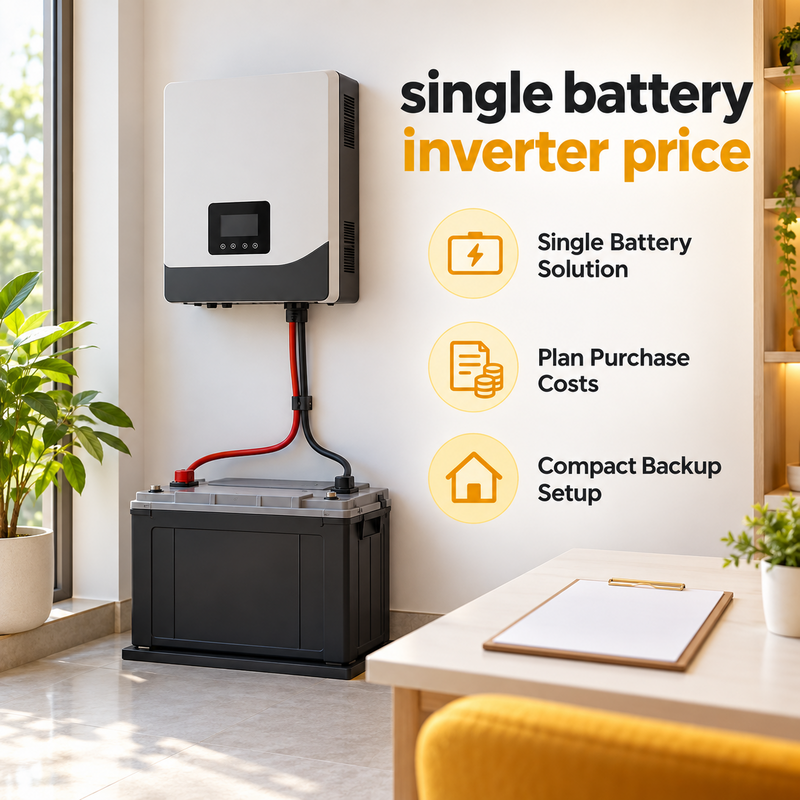
Single Battery Inverter Price for Wholesale Buyers

5,000+ units ready stock, 1–5 days fast global delivery

application/single-battery-inverter-price, application/single-battery-inverter-price, 
Inquiry
Inquiry

single battery inverter price

Understanding  the  price of a single battery  inverter  is crucial  for B2B buyers, especially  those involved  in industries such as  renewable energy, marine applications, and residential storage  solutions.  As  companies look for  reliable energy storage systems,  the single  battery inverter becomes a key component in optimizing energy usage. This article  will  address  the main concerns buyers face regarding  price, quality, and application suitability, providing  insights to help  make informed purchasing decisions.

Single Battery Inverter Options for Bulk Orders

Single Battery Inverter Options for Bulk Orders

Selecting  the appropriate single battery  inverter for your project involves evaluating  your specific energy requirements  and  application. Start by  determining  the total  energy output needed—this is usually measured in  watts or kilowatts. For example, if  you're powering a residential solar system, calculate the total wattage  of all connected devices to ensure that the inverter can handle the load.

Next, consider the inverter type. There are several options, including pure sine wave inverters, modified  sine wave  inverters, and grid-tied inverters. Pure sine wave inverters are typically preferred for their efficiency and compatibility with sensitive electronics. Additionally, check  for certifications such as UN38.3 and CE, which  indicate compliance with safety and  quality  standards.

Customization options  can also play a significant role. Buyers should inquire about the manufacturer's ability to tailor the inverter to  specific project  needs, such as different voltage requirements or integrated monitoring systems.

Common Installation Issues with Single Battery Inverters and Solutions

Several key factors influence the price of battery  inverters:

Specifications: The inverter's power rating, efficiency, and features  (such as smart technology) directly affect its cost. Higher power ratings typically  mean a  higher price.

Materials and Components: The quality  of materials used in manufacturing can impact durability and performance. Inverters made with high-quality components may have a higher  price but can offer better reliability.

Manufacturing Capabilities:  The production process and the technology used in manufacturing can affect pricing. Advanced manufacturing techniques  often lead to higher costs but can ensure superior product quality.

Market Demand and Supply: Fluctuations in demand for  renewable energy solutions  can impact prices. Suppliers may adjust their  pricing based on  market trends and competition.

Volume Orders: Wholesale buyers  often benefit from bulk pricing.  Ordering  larger quantities can  significantly  reduce the unit  price, making it essential to discuss  minimum order quantities (MOQs) with manufacturers.


Advantages of Using Single Battery Inverters in Energy Storage Systems

Proper installation of single battery inverters is crucial for optimal performance. Here are some general guidelines  to  consider based on various applications:

Solar Applications: Ensure that  the inverter is installed in a shaded, ventilated area to prevent overheating. It should be mounted close to the battery storage system to minimize energy loss.


Marine  Applications: In a  marine environment, the inverter should be installed in a location that  is protected from  moisture and vibration.  Use corrosion-resistant  materials to enhance longevity.

Residential  Storage: For residential applications, ensure that the inverter is compatible with the  home’s electrical  system. Engage a qualified electrician for proper installation and compliance with local regulations.


UPS  Systems: In uninterruptible power supply  systems, the inverter must be  installed with  consideration for load capacity and backup  time requirements. Regular maintenance  checks are recommended to ensure reliability.

How to Assess the Performance of Single Battery Inverters

Buyers should be aware of  potential issues that can arise with battery inverters and how to address them:

Overheating: This can occur if the  inverter is not adequately ventilated or if it is overloaded. Ensure proper installation and load calculations are performed  to prevent overheating.


Battery Compatibility: Not all inverters work  with every battery  type.  Verify compatibility  with LiFePO4 batteries or other types to prevent operational issues.

Faulty Connections: Loose or damaged connections can lead to performance failures. Regularly inspect connections and use quality connectors  to ensure reliability.

Software  Glitches: Inverters equipped with smart technology may experience software issues. Keep firmware updated and consult  the manufacturer for troubleshooting support when necessary.

Warranty and  Support: Ensure that you understand the warranty  terms and the support offered by the manufacturer. This will  provide peace of mind in  the event of product issues.

By addressing  these common concerns and understanding the pricing  structure of single  battery inverters, buyers can make informed decisions  that meet their specific needs and  maximize investment returns.

Where to Buy Single Battery Inverters at Wholesale Prices

The price of a single battery inverter can vary significantly based on several factors, including the inverter's specifications, production  scale, and additional features. For wholesale buyers, understanding these price determinants is essential  for budgeting and negotiation.  Generally, a well-manufactured single battery  inverter will range from a few  hundred  to several thousand dollars,  depending on its capacity,  efficiency, and  intended  application.


Buyers should consider not  just the upfront cost but also the  long-term value.  This includes factors such as  energy efficiency,  warranty, and expected lifespan. For  instance, a higher initial investment in a  more efficient inverter may lead to lower  operational costs over time, making  it a more economical choice in the long run.

Get a Free Quote

Our representative will contact you soon.
0/1000