Choosing the Right 24V Deep Cycle Battery

5,000+ units ready stock, 1–5 days fast global delivery

application/24v-deep-cycle-battery, application/24v-deep-cycle-battery, 
Inquiry
Inquiry

24v deep cycle battery

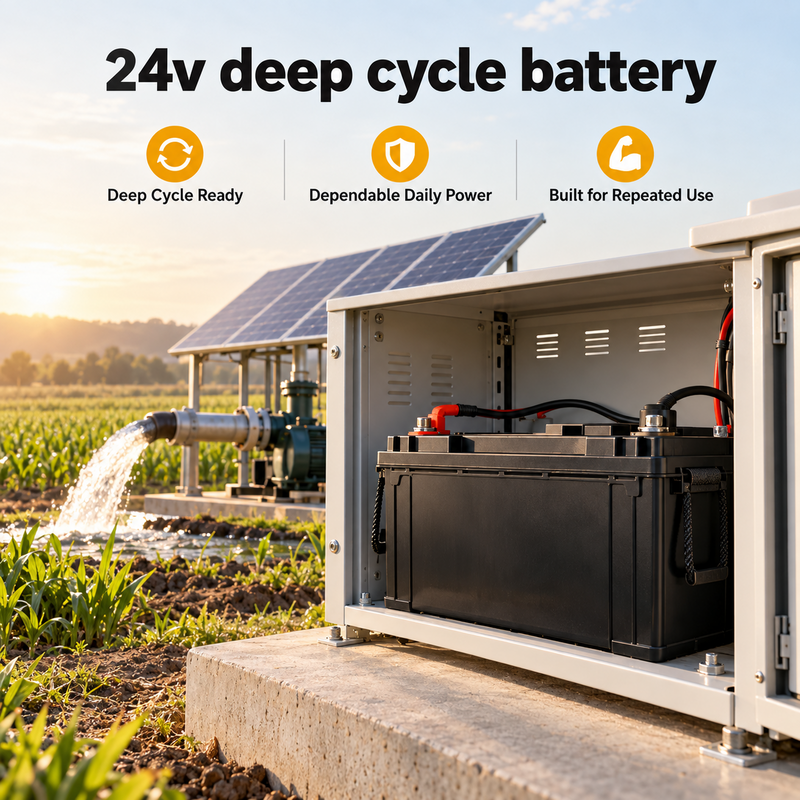
When selecting  a 24V deep cycle battery, buyers need to consider  a variety  of factors, such as application requirements, compatibility, and  quality specifications.  These  batteries, specifically designed  for extensive discharge and  recharge cycles, are  essential in sectors like solar energy, RV usage, and  marine  applications. This  article aims to guide purchasing managers and  engineers  through the selection process, installation,  manufacturing quality factors,  cost  considerations,  and common issues associated with 24V  deep cycle batteries.

 
Installation Guide for 24V Deep Cycle Batteries in Various Applications

Installation Guide for 24V Deep Cycle Batteries in Various Applications

Proper installation of 24V deep cycle batteries is vital for performance and longevity. Here are key steps  for different applications:

Solar Energy Systems:

  Location: Install  batteries in  a well-ventilated area, avoiding direct sunlight and extreme temperatures. Connection: Use appropriate gauge cables to connect the batteries in series to achieve the required voltage. Ensure that all connections are tight and corrosion-free to prevent energy  loss.

RV Applications:

Mounting: Secure the battery to prevent  movement during transit. Vibration can damage internal  components. Charging:  Utilize a compatible solar charger or shore power to maintain battery health. Regular checks on voltage and state of charge can prevent deep  discharges. 

Marine Applications:

Waterproofing: Ensure the battery compartment is sealed to prevent moisture  ingress. Wiring: Use  marine-grade wiring and connectors to withstand the harsh  marine environment, ensuring reliable operation.

Following these  guidelines during installation  will  enhance performance and  extend the  life of 24V  deep cycle  batteries across various applications.

Understanding Quality Factors in 24V Deep Cycle Battery Manufacturing

Quality is  paramount when it comes to manufacturing  24V deep cycle batteries. Key factors include:

Materials:  High-quality materials, particularly in the battery  cells and casing, significantly affect performance and lifespan. LiFePO4 technology, known for its safety and stability, is a preferred choice in many applications.

Certifications: Look for  batteries that have relevant certifications like  UN38.3 and CE. These certifications indicate compliance with international safety standards, which is particularly important for products used in critical  applications.


Battery Management System (BMS):  A reliable BMS  is essential  for safety and efficiency. It protects against  overcharging, over-discharging, and overheating, which can lead to battery failure.

Manufacturing Processes: Understanding the manufacturing processes, such as cell  formation and quality control checks,  can illuminate potential reliability. Companies that implement strict quality control measures during production tend  to offer superior products.

Testing: Rigorous testing, including cycle life, thermal runaway  tests, and performance under load, ensures that the batteries perform reliably  under  various conditions.

By prioritizing these quality factors, buyers can make informed decisions that ensure they select  durable and  efficient 24V deep cycle batteries for their needs.

Cost Considerations When Purchasing 24V Deep Cycle Batteries in Bulk

When purchasing 24V  deep cycle batteries in bulk, several cost factors should be evaluated:

Unit Price: Bulk purchases often come  with volume discounts. Buyers should negotiate  pricing based on their specific needs and order quantities.

Shipping and Handling:  Factor  in shipping costs, especially for international orders. Batteries  can  be subject to hazardous material regulations, potentially increasing shipping complexity and cost.

Lead Time: Understand  the lead time for bulk orders, as this can affect project timelines. Manufacturers with efficient production capabilities and  stock availability can often fulfill orders more rapidly.

Warranty  and Support: Consider the warranty offered. A  longer warranty period may indicate higher confidence  in product reliability, offering better  long-term value.

Total Cost  of Ownership: Evaluate the  battery's expected lifespan and maintenance needs. A lower initial price may lead  to  higher long-term costs if the battery requires frequent replacements or has poor  performance.

By considering these factors, purchasing managers can  ensure that they secure the best overall  deal when acquiring 24V deep cycle batteries in bulk.

Common Problems with 24V Deep Cycle Batteries and Their Solutions

While 24V deep cycle  batteries are robust,  common  issues can arise. Here are several challenges and their solutions:


Overcharging:  This can lead to overheating and  reduced battery lifespan. Implementing a proper BMS and using smart chargers can  help prevent overcharging.


Deep Discharge: Regularly discharging a battery below its recommended level can shorten its  life. Users should monitor their usage and  recharge batteries promptly  to maintain health.

Corrosion: Battery  terminals  can corrode  due  to exposure to moisture or poor connections. Regular inspection and cleaning of terminals can mitigate this issue.

Temperature Sensitivity: Batteries can be sensitive to extreme temperatures. Ensuring proper installation  in temperature-controlled environments can help maintain performance.


Physical Damage:  Vibration or impact can damage battery internals. Secure mounting and handling practices  during transportation can reduce this risk.

By  being aware of these common problems and implementing preventative measures, buyers can ensure reliable performance from their 24V deep cycle batteries.

How to Choose the Right 24V Deep Cycle Battery for Your Projects

Selecting the  appropriate 24V deep cycle battery begins with understanding the specific requirements of your application. Key considerations include capacity, cycle  depth, and discharge rates.

Capacity: Measured in amp-hours (Ah), capacity indicates how much energy the battery can store. A higher capacity is crucial for applications requiring extended use without frequent recharging, such as  in off-grid solar setups.

Cycle Depth: This refers to the percentage of the battery's total capacity that can be used before recharging is necessary. Lithium Iron Phosphate (LiFePO4) batteries, like those produced by Shenzhen  Yanshuosheng Technology Co., Ltd., can generally handle deeper discharges compared to lead-acid batteries,  which may help in  maximizing the value for applications  with  high energy demands.

Discharge Rates: Different  applications may require varying discharge rates. Assess the continuous and peak discharge rates needed for your equipment to ensure smooth operation without damaging the battery.

Physical Size and Weight: Ensure that  the battery fits within  the available space and does not exceed weight limits for mobile applications.


Compatibility: Ensure  that the battery is compatible with your charging systems and inverters. The BMS (Battery Management System) certification, which monitors battery health and  performance, is crucial  for prolonging battery life  and  optimizing performance.

By carefully evaluating these factors, buyers  can ensure they select the most suitable 24V  deep cycle battery for their  projects.

Get a Free Quote

Our representative will contact you soon.
0/1000