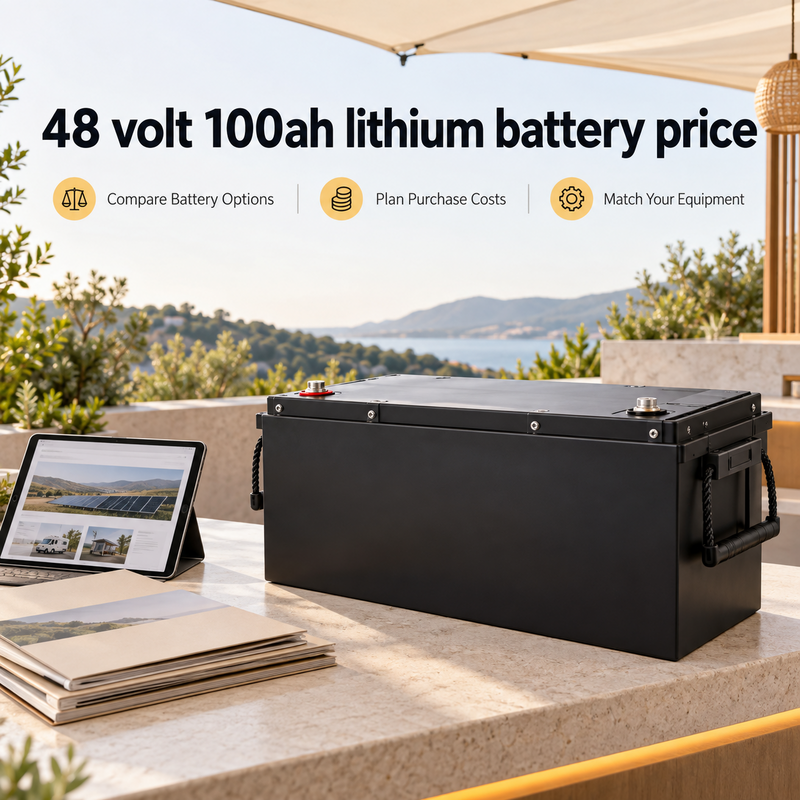
48 Volt 100Ah Lithium Battery Pricing Insights

5,000+ units ready stock, 1–5 days fast global delivery

application/48-volt-100ah-lithium-battery-price, application/48-volt-100ah-lithium-battery-price, 
Inquiry
Inquiry

48 volt 100ah lithium battery price

Understanding  the price of a  48  volt  100Ah lithium battery is essential for  wholesale buyers in various sectors, including  renewable energy, marine applications, and backup  power systems. This article will  delve into the factors influencing  pricing, key specifications to consider, quality standards,  common  issues, and applications relevant  to these  batteries. By addressing  these concerns, we aim to  equip purchasing managers and distributors with the  knowledge necessary to  make  informed decisions  when sourcing these energy  storage solutions.

Key Specifications of 48 Volt 100Ah Lithium Batteries for Buyers

Key Specifications of 48 Volt 100Ah Lithium Batteries for Buyers

When purchasing 48V 100Ah lithium batteries, specific key specifications should  be closely examined.

Capacity and Voltage: The nominal voltage of 48V and  the capacity of 100Ah  defines  the energy output,  crucial for applications requiring consistent  power  delivery.

Cycle Life: This refers to the number of charge and discharge  cycles the battery can undergo before  its capacity significantly declines.  A higher cycle life  indicates longer-lasting performance.

Discharge Rate: Understanding  the continuous and peak discharge rates is vital, especially for applications that require high  bursts of energy, such as in UPS (Uninterruptible Power  Supply) systems.

Dimensions and Weight:  These factors determine the feasibility of installation  in specific applications, such as RVs  or marine systems where space is limited.

BMS (Battery Management System): A robust BMS enhances safety and performance by monitoring the battery’s health,  ensuring optimal operation, and preventing overcharging or deep discharging.


Temperature Range: Operating temperature is  crucial, as batteries may perform differently under extreme conditions. Ensure the chosen battery can operate efficiently within the expected environmental conditions.

These specifications should align with the end-use requirements to maximize performance and reliability.

Where to Find Reliable Suppliers for 48 Volt 100Ah Lithium Batteries

Quality is paramount when sourcing 48V 100Ah lithium batteries. Buyers should look for compliance with international standards and certifications, such as  UN38.3 for transportation  safety and CE for European  compliance.

In addition to certifications,  consider the following quality  indicators:

Warranty Period: A  longer warranty often reflects manufacturer confidence in product durability and performance. Look for warranties  of at  least 5  years.

Quality Control Processes: Understanding the manufacturer’s quality assurance  processes, including testing for voltage stability, capacity, and safety features, can provide insights into the reliability of the batteries.

Material Quality: The materials used  in the battery’s construction, such  as the quality of lithium iron phosphate and other components, can significantly impact  performance and  safety.

By scrutinizing these quality standards,  buyers can mitigate risks associated with  poor-quality products  and  ensure they are  investing in reliable energy storage solutions.


Evaluating the Quality of 48 Volt 100Ah Lithium Batteries for Projects

While 48V lithium batteries offer numerous advantages, they are not  without challenges.  Common issues include:

Overcharging and Overdischarging: This  can lead to reduced battery life  or even failure. A reliable BMS is essential for monitoring and  managing charge cycles, preventing  these issues from occurring.

Temperature  Sensitivity: Lithium  batteries can be sensitive to extreme temperatures. Ensure that the batteries are used within  the manufacturer’s specified temperature range  and consider thermal management solutions if  used in extreme conditions.

Dendrite Formation: This can occur during charging and lead to short circuits.  Ensuring that the charging protocol  adheres to manufacturer guidelines can  help mitigate this risk.

Self-Discharge: Lithium batteries  may experience  self-discharge, which can be problematic if left unused for extended periods. Regular monitoring and maintenance  can help keep the batteries in optimal condition.

By  being aware of these common problems and their solutions, buyers can better  prepare for maintenance and longevity of the  battery systems.

Installation Guidelines for 48 Volt 100Ah Lithium Battery Systems

48V 100Ah lithium batteries are versatile and find  applications across multiple industries.

Renewable Energy Systems: They are commonly used in solar energy storage systems, allowing for  efficient energy management and  backup power supply.

Marine Applications:  Their lightweight nature and high energy density  make them ideal for use  in electric boats and yachts, providing reliable power  without adding  significant weight.

Recreational Vehicles (RVs):  The compact design and high performance of these  batteries are perfect for RV applications, ensuring that appliances and equipment can run smoothly during travel.

Uninterruptible Power Supply (UPS): In critical  systems where power reliability is essential, such as data  centers, these batteries provide backup power during outages, ensuring continuity of  operations.

Electric Vehicles: As the demand for electric vehicles grows, these batteries are increasingly  used to power electric scooters, bikes, and other light  electric vehicles due to their efficiency and  long service life.

Understanding these applications helps buyers identify the best-fit solutions for their  specific  needs and enhances the decision-making process  when  sourcing 48V 100Ah lithium batteries.

What to Consider When Sourcing 48 Volt 100Ah Lithium Batteries Wholesale

When evaluating the price of 48  volt 100Ah lithium batteries, several  factors come into play.  First, the battery chemistry, typically  LiFePO4 (Lithium Iron Phosphate),  is  known for its safety and longevity, which can affect the  price point  compared to other lithium chemistries.  The production processes, such as the quality of materials  used, manufacturing capabilities, and  economies of scale, also impact costs.

Additionally, certifications like UN38.3 and CE, which ensure  safety and compliance, can add to the overall price.  Buyers should  also consider the minimum order quantity (MOQ) required by manufacturers. For example, a larger order may reduce the  per-unit price,  making it more cost-effective for wholesale buyers. Understanding  these aspects  will help  in negotiating better pricing and evaluating  different suppliers.

Get a Free Quote

Our representative will contact you soon.
0/1000