48V 100Ah Lithium Ion Battery: Selection Guide

5,000+ units ready stock, 1–5 days fast global delivery

application/lithium-ion-battery-48v-100ah, application/lithium-ion-battery-48v-100ah, 
Inquiry
Inquiry

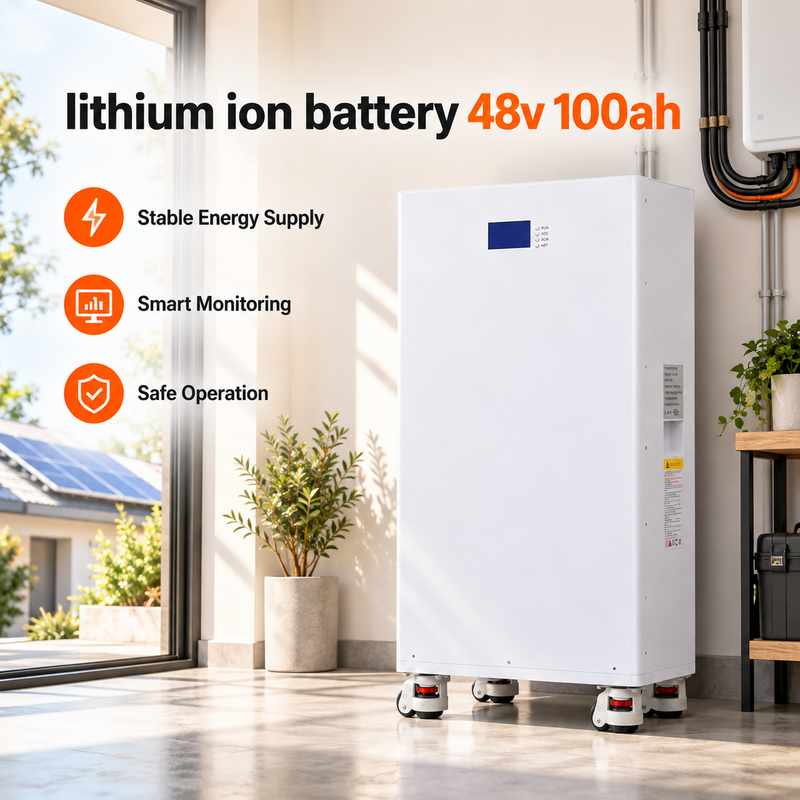
lithium ion battery 48v 100ah

The 48V  100Ah lithium-ion battery is  a powerful  energy storage solution  designed for various  applications, including  solar  energy systems, RVs, UPS systems, and marine use. Understanding how to select the  right battery  for your specific needs, along with the key  specifications to  consider, can significantly impact performance  and efficiency. This  article aims  to provide insights into  the selection process,  cost factors, installation challenges, and  the advantages of using LiFePO4  technology  in 48V 100Ah  lithium-ion batteries.

Key Specifications to Evaluate in 48V 100Ah Lithium Ion Battery Systems

Key Specifications to Evaluate in 48V 100Ah Lithium Ion Battery Systems

When assessing 48V 100Ah lithium-ion batteries, several specifications are crucial to  ensure optimal performance. 

Battery  Chemistry: Lithium Iron Phosphate (LiFePO4) is the preferred chemistry for its stability, safety, and longer cycle life compared to other lithium-ion chemistries.  This  means  lower risks of thermal  runaway  and a longer lifespan, making it ideal for applications requiring reliability.

Capacity  and Discharge  Rate: The nominal capacity (100Ah) is essential, but understanding the discharge rate is equally important. Evaluate the continuous and peak discharge rates to ensure they meet your power demands without compromising performance.


Cycle Life: Typically, LiFePO4 batteries can achieve over  2000 cycles at 80% depth of  discharge (DoD). This characteristic is crucial for applications where frequent charging and discharging  occur, as it directly impacts  the total cost of  ownership.

Size  and Weight: Ensure that the physical dimensions and weight  of the battery fit your installation space. A compact design can be beneficial in  space-constrained environments like RVs or marine applications.

Battery Management System (BMS): A robust BMS enhances safety and performance by monitoring voltage, current, and  temperature. Ensure that the BMS is capable of balancing cells and providing necessary protections against overcharge, over-discharge, and short circuits.

Understanding the Cost Factors of 48V 100Ah Lithium Ion Battery Purchases

The cost of  a 48V  100Ah lithium-ion battery can vary widely based on several factors.

Material  Costs: The  choice of materials,  especially for the battery cells and casing, significantly influences price.  LiFePO4, while more expensive initially,  offers better safety and longevity, which can  lead to lower lifetime costs.

Manufacturing Processes: Advanced manufacturing techniques  and quality control processes can drive up the initial purchase price but may reduce defects and improve reliability. Suppliers with rigorous testing and certification processes often justify higher costs through better performance.

Customization: If your application requires specific features, such as custom dimensions  or enhanced BMS capabilities, be prepared for increased costs. Custom  solutions may have higher minimum order quantities (MOQ) and longer lead times.

Market Conditions: Prices can fluctuate based on supply and demand dynamics in the lithium-ion battery  market.  Staying updated on market trends  can help you  time your purchase effectively.


Shipping and  Import Duties: If sourcing from  international suppliers, consider the additional costs associated with shipping and any applicable import duties, which  can impact your  total budget.

Common Installation Challenges for 48V 100Ah Lithium Ion Batteries

Installing a 48V  100Ah lithium-ion battery system can present several challenges that require careful  planning and execution.

Space Constraints: Ensure that  the installation  area can accommodate the battery's  size  and weight. Proper ventilation is also necessary to prevent  overheating.

Electrical  Compatibility: Confirm that your existing electrical systems, including inverters and  chargers, are compatible with the battery  specifications.  Mismatched systems can lead to inefficiencies and potential  damage.

Safety Protocols: Follow all safety guidelines  during installation. This  includes using appropriate personal protective equipment (PPE) and ensuring that connections are secure to prevent short  circuits.

Environmental Considerations: If the battery will be used in  harsh conditions, such as extreme temperatures or high humidity, additional protective measures  may be needed to  ensure longevity.

Monitoring Systems: Implement  a monitoring system to track the battery's performance post-installation. This can help in  quickly identifying any issues that arise during operation.

Material Advantages of LiFePO4 in 48V 100Ah Lithium Ion Batteries

Lithium Iron Phosphate (LiFePO4)  offers several advantages that make it an excellent choice for 48V 100Ah lithium-ion batteries.

Safety: LiFePO4 is known for  its thermal  stability, significantly  reducing the risk of overheating and  thermal runaway compared  to other lithium-ion chemistries. This  makes it particularly suitable for applications where safety is  paramount, such as  in residential energy storage or electric vehicles.

Long Cycle Life: With a cycle life of more than 2000 cycles at 80% DoD, LiFePO4 batteries provide excellent longevity, which can lead  to lower total costs over time.

Environmental Impact: LiFePO4 batteries are less toxic than other lithium-ion options, making them more environmentally friendly. Additionally, they can often  be recycled more efficiently.

Temperature Tolerance:  These batteries exhibit excellent performance in a  wider temperature range, making them  adaptable for both hot and cold operating environments.

High Discharge  Efficiency: LiFePO4 batteries can deliver high currents without significant voltage drops, making them  suitable for applications requiring rapid power delivery, such as in  electric vehicles or high-demand solar applications.

By understanding these aspects  of the 48V 100Ah lithium-ion battery  and considering the practical information  provided, buyers can make informed decisions that best suit their needs and applications.

How to Choose the Right 48V 100Ah Lithium Ion Battery for Your Needs

Selecting  the right 48V 100Ah lithium-ion battery involves evaluating several critical factors. First, consider the specific application—whether it  be for solar energy storage,  electric vehicles, or emergency power systems. Each application may have different performance  requirements, such as  discharge rates and cycle life.

Next, assess the compatibility with your existing systems. Ensure  that the battery's voltage and capacity match your energy  demands and that it integrates seamlessly with your inverter or charger. Additionally, consider  the environmental conditions in which the battery  will  operate. For instance,  if the battery will be exposed  to extreme  temperatures or moisture,  look for  products with robust  protection and temperature management features.

Finally, examine the manufacturer’s credentials, including certifications like UN38.3 and CE, which indicate compliance  with international safety standards. A reputable manufacturer, such as Shenzhen Yanshuosheng Technology Co., Ltd., can provide not  only quality assurance but also support for installation and  maintenance.


Get a Free Quote

Our representative will contact you soon.
0/1000