Choosing the Right 48V 200Ah LiFePO4 Battery

5,000+ units ready stock, 1–5 days fast global delivery

application/48v-200ah-lifepo4-battery, application/48v-200ah-lifepo4-battery, 
Inquiry
Inquiry

48v 200ah lifepo4 battery

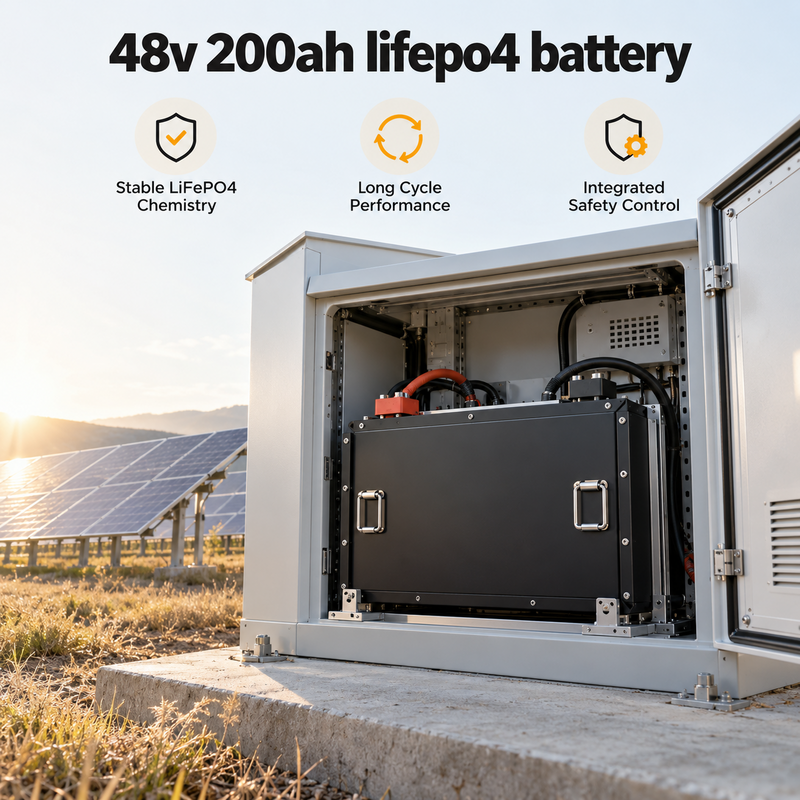
The 48V 200Ah  LiFePO4 battery is a reliable energy  storage  solution tailored  for various applications, including solar energy systems,  RVs, UPS, and marine uses.  As a  purchasing  manager or  distributor, your primary  concerns often  revolve around quality,  performance,  and compatibility with  your specific needs.  This article will guide you through the  essential  aspects of  choosing, specifying, and installing 48V  200Ah  LiFePO4 batteries, ensuring you make informed decisions for your projects.

Key Specifications of 48V 200Ah LiFePO4 Batteries You Should Know

Key Specifications of 48V 200Ah LiFePO4 Batteries You Should Know

Understanding the key specifications of a 48V 200Ah LiFePO4 battery is vital for  making an informed purchase.  Here are the primary specifications to consider:

Voltage and Capacity: The nominal voltage of 48V signifies compatibility with many solar and electrical systems, while the capacity of 200Ah indicates how  much  energy the battery  can  store. This translates to approximately 9.6 kWh  of usable  energy, enough  for typical residential setups or small commercial applications.

Cycle Life:  LiFePO4 batteries typically offer a cycle life of  2000 to 5000 cycles, depending on depth of discharge (DoD). A higher cycle life means lower long-term costs, as  the battery can  be cycled more times before needing replacement.

Discharge Rate: Look for  the maximum continuous discharge current. This specification indicates the battery's ability to handle peak loads  without performance degradation. For many applications, a continuous discharge rate of 0.5C to  1C is ideal.

Temperature Range: Operating temperature affects battery performance and lifespan. A good LiFePO4 battery should function efficiently between -20°C to 60°C. Understanding this range helps in selecting the right battery for varied environmental  conditions.

Weight and  Dimensions: Ensure the battery's dimensions and  weight are compatible with your installation environment.  This is particularly important for mobile applications like RVs or boats.

Understanding the Quality Control Process for LiFePO4 Batteries

Quality control (QC) is crucial  in the manufacturing of LiFePO4 batteries to  ensure safety and performance. Shenzhen Yanshuosheng Technology Co., Ltd. employs a rigorous QC process throughout production.

Material Inspection:  The quality of raw materials, such as lithium iron phosphate and other components,  is inspected before production. This ensures that  only high-grade  materials are  used, which is essential for battery  performance and safety.

Manufacturing Process  Control: During production, processes like cell assembly, welding, and packaging are monitored closely. Automated systems may be utilized to ensure precision and repeatability, reducing the chance of human  error.

Testing: Each battery undergoes  extensive  testing, including capacity testing, cycle life testing, and safety tests,  such as short-circuit and overcharge  tests. This step verifies that the battery meets the specified performance criteria  before it leaves the factory.

Certification Compliance: Finally, ensuring  that  the batteries meet necessary certifications like  UN38.3 and CE is a critical part of  the QC process. This provides buyers with confidence  in the safety and reliability of the product.

Installation Guidelines for 48V 200Ah LiFePO4 Battery Systems

Proper installation is  crucial to maximize the performance and  lifespan  of a 48V 200Ah LiFePO4 battery. Here are essential guidelines to follow:

Location Selection: Install the battery  in a well-ventilated area to prevent  overheating. Avoid locations with extreme temperatures or high humidity, as these conditions can affect battery performance.


Wiring and Connections: Use appropriate gauge wiring to connect the battery to your system. The  wire should be  rated for the maximum current your application requires. Ensure all connections  are secure  to  avoid voltage drops and  potential hazards.

BMS Setup: If using an external BMS, ensure that  it is correctly configured to match the battery's  specifications. The  BMS should be capable  of monitoring voltage,  current, and temperature, providing real-time data for  optimal performance.

Testing:  After installation, conduct a  load test to verify that the system operates as intended. Monitor the battery's performance closely during the initial charge and discharge cycles to ensure everything functions correctly.

Common Problems with 48V 200Ah LiFePO4 Batteries and Solutions

Understanding common issues that may arise with 48V 200Ah LiFePO4 batteries can help you troubleshoot effectively:

Overheating: This can  occur if the battery is charged or discharged  too quickly. To mitigate  this, ensure that the charger and  inverter are compatible with the battery's specifications, and avoid operating in extreme temperatures.

Short Cycle Life:  If the battery is frequently discharged beyond its recommended DoD, it can lead to  a shortened cycle life. Educate users on the  importance of maintaining a suitable discharge level to prolong  battery health.

Poor Performance: If you notice decreased performance, it may be  due to poor connections or wiring issues. Regularly check all connections for  corrosion or looseness, and ensure that the wiring is adequate for the application.

BMS Malfunction: If  the BMS fails,  it can lead to overcharging or discharging. Regularly inspect  the BMS  and replace any faulty  components immediately to maintain safe operation.

By understanding these specifications, installation  processes, and common  problems, you can make informed  decisions regarding 48V  200Ah LiFePO4 batteries,  ensuring you select the best solution for your energy storage needs.

Choosing the Right 48V 200Ah LiFePO4 Battery for Your Needs

When selecting a 48V  200Ah LiFePO4 battery, consider  your application's  specific requirements.  The  first step  is to evaluate  the energy needs of your system. For solar energy systems, assess  the total energy consumption and how often the battery will be cycled. This helps determine whether a deep-cycle  battery with a robust  discharge capacity is necessary.

Next, consider additional features such as Battery Management Systems (BMS). A quality BMS can enhance  safety and longevity by preventing overcharging and deep discharging, which are critical for maintaining  battery health. Also, verify that the battery complies with  safety certifications such as UN38.3 and CE,  which are essential for  international shipping and usage in various applications.

Lastly, think about the physical dimensions  and weight, especially for installations in constrained spaces, such  as RVs and marine environments.  Make sure  the  battery fits well within your designated area without compromising accessibility for maintenance.

Get a Free Quote

Our representative will contact you soon.
0/1000