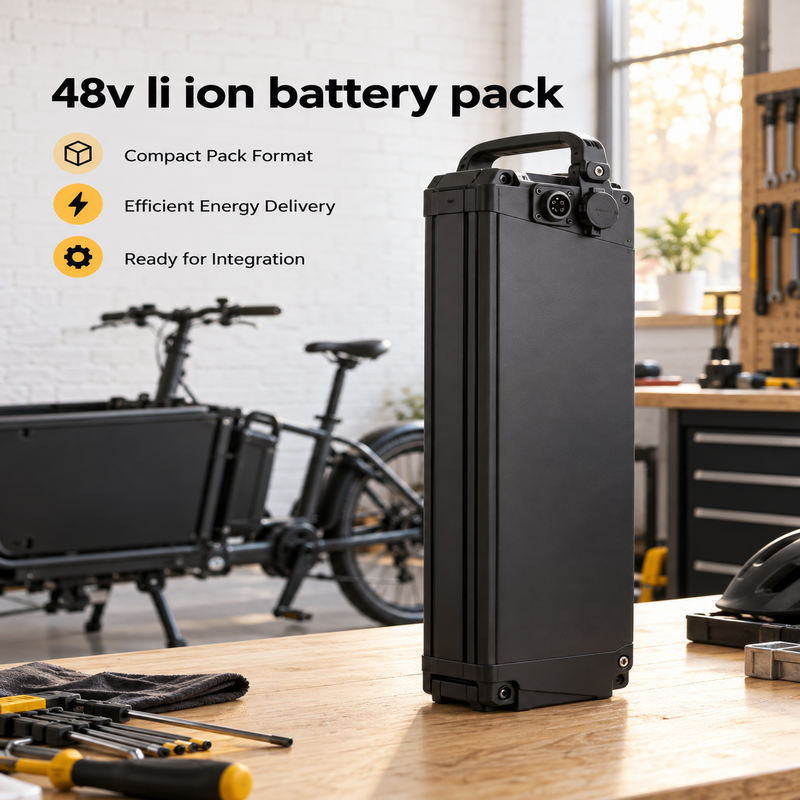
Choosing the Right 48V Li-Ion Battery Pack

5,000+ units ready stock, 1–5 days fast global delivery

application/48v-li-ion-battery-pack, application/48v-li-ion-battery-pack, 
Inquiry
Inquiry

48v li ion battery pack

Choosing the  right  48V Li-Ion battery pack for your project needs is crucial for  ensuring optimal performance  and reliability in applications such as solar energy  storage, recreational  vehicles (RVs), and marine  systems. As  a B2B buyer, you may have  concerns  about product specifications, sourcing,  cost, and installation. This article will provide  valuable insights into  the critical factors  to consider when  selecting a 48V  Li-Ion battery pack,  helping you  make informed  purchasing  decisions.

Where to Source Reliable Wholesale 48V Li-Ion Battery Packs

Where to Source Reliable Wholesale 48V Li-Ion Battery Packs

Sourcing reliable wholesale 48V Li-Ion battery packs requires thorough research and evaluation of potential  suppliers.  Start by identifying  manufacturers with a strong reputation and experience in the industry. Look for  companies that specialize in LiFePO4 energy  storage systems, as  they typically offer superior safety and  longevity  compared to  other lithium-ion chemistries.

It's beneficial to assess  certifications such as UN38.3 and CE, which indicate compliance with international safety  and quality standards. These certifications assure you that the batteries have  undergone rigorous testing and meet necessary safety requirements.

Establish communication with  potential suppliers to  inquire  about their production capabilities, lead times, and minimum order  quantities (MOQs).  A manufacturer like Shenzhen Yanshuosheng Technology Co., Ltd., which has experience exporting to over  50 countries,  could provide insights  into logistics and regulatory considerations for your specific market.

Key Specifications to Evaluate in 48V Li-Ion Battery Packs

When evaluating 48V Li-Ion battery packs, certain specifications are critical to ensuring the product  meets your  operational  needs.

Voltage and  Capacity: Ensure the pack provides  the required voltage and  capacity for your application. A mismatch can lead to inefficiencies  or potential damage to connected devices.


Chemistry Type: LiFePO4 (Lithium Iron Phosphate) batteries offer advantages such  as thermal  stability, safety, and a longer cycle life, making them suitable  for various applications, particularly in residential and commercial energy storage.

Battery  Management System (BMS):  A  robust BMS is essential for monitoring individual cell voltages, managing charge/discharge rates, and ensuring safety. Verify that the  BMS  has  features such as over-voltage protection, under-voltage protection, and temperature management.

Physical Dimensions: Ensure the  battery pack fits within your installation space. This includes not only the size but also the weight, which  can affect installation requirements.

Warranty and Support: Check the warranty period and the manufacturer’s support options. A reliable warranty can  protect your investment and provide peace of mind regarding product performance.

Cost Factors to Consider When Purchasing 48V Li-Ion Battery Packs

Understanding  the cost  factors associated with purchasing 48V Li-Ion battery  packs is  vital for accurate budgeting. Key cost components include  the price per unit,  shipping and handling fees, and any  applicable tariffs or taxes for  international  orders.

The  price  per unit can vary based on factors such as capacity, technology,  and features like built-in BMS. Typically, higher capacity and advanced safety features result in a higher  upfront cost. However, consider the  total cost of  ownership, which includes  potential savings from longer cycle life and reduced maintenance requirements.

Additionally, factor in installation costs, including any  necessary equipment or modifications to your existing systems. Working with  a supplier that offers installation guidance can help reduce  these costs  and ensure proper setup.

Installation Guidance for 48V Li-Ion Battery Systems

Proper installation  of 48V Li-Ion battery systems is crucial for ensuring safety and optimal  performance. Begin by reviewing the manufacturer's installation manual, which  should include detailed  instructions specific to  the battery model.


Ensure that the  installation area is well-ventilated and complies with all  safety regulations. Consider the  following during installation:

Mounting: Secure the battery pack in  a stable position  to prevent  movement during operation. Ensure that it is positioned away from direct sunlight or sources of heat.

Electrical Connections: Follow proper electrical connection protocols to avoid short circuits or damage. Use  correctly rated  cables and connectors, and double-check polarity before powering on the system.

Monitoring: If applicable, integrate the battery management system with your monitoring equipment. This will allow you  to track performance  metrics such as state of charge and temperature.

Testing: After installation, conduct a thorough test of the system to confirm that all components function correctly. This is especially important in  applications where reliability is critical, such as in UPS or solar storage systems.

By taking the time to  evaluate specifications, costs,  and installation requirements, you can  ensure that the 48V Li-Ion battery pack you choose will meet your project's needs effectively and safely.

Choosing the Right 48V Li-Ion Battery Pack for Your Project Needs

When selecting a  48V Li-Ion battery pack, it is essential to consider  your specific application  requirements. Key factors include capacity, discharge rates, cycle life, and environmental conditions. The capacity, measured  in amp-hours (Ah), determines how  long the battery can power your devices. A higher capacity is vital for applications with high energy demands,  such as solar storage systems that need to supply consistent power over extended periods.

Discharge rates, often specified as  C-rates, indicate how quickly the battery can release its  stored energy. Applications like  electric vehicles may require high discharge rates for quick acceleration, while stationary storage systems may prioritize longer discharge times for efficiency. Cycle life,  or the number of  charge and discharge cycles a battery  can undergo before its capacity significantly diminishes, is another critical  specification. For industrial applications, a higher cycle life translates  to lower  replacement costs over time.

Additionally, consider environmental  factors. The operating temperature range and resistance to moisture or dust are critical for  applications  exposed to harsh conditions. Batteries with robust thermal management systems can maintain  performance and longevity, particularly in extreme temperatures.


Get a Free Quote

Our representative will contact you soon.
0/1000