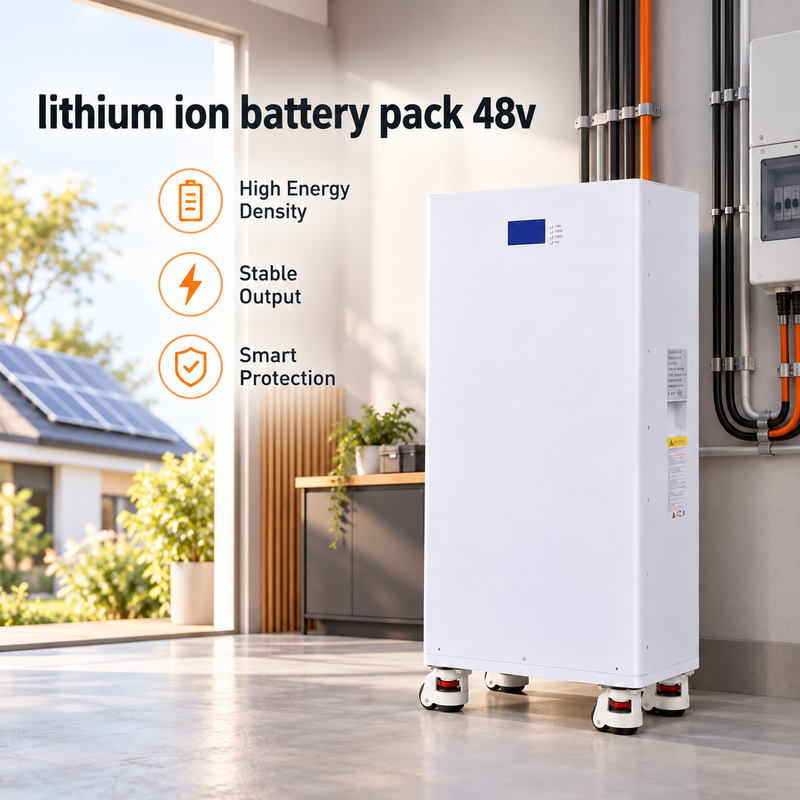
Choosing the Right 48V Lithium Ion Battery Pack

5,000+ units ready stock, 1–5 days fast global delivery

application/lithium-ion-battery-pack-48v, application/lithium-ion-battery-pack-48v, 
Inquiry
Inquiry

lithium ion battery pack 48v

Choosing the right lithium  ion battery pack, specifically the  48V variant, is crucial for various applications including solar energy  storage, RV power  systems, and  marine use. As a B2B  buyer,  you  need to consider  factors like performance specifications, quality  assurance, and installation challenges to ensure you make an  informed decision. This  article will  guide you through the essential aspects of selecting a 48V lithium  ion battery  pack,  helping  you  address your main concerns and  enhancing your purchasing  strategy.

Top Specifications to Evaluate in 48V Lithium Ion Battery Packs

Top Specifications to Evaluate in 48V Lithium Ion Battery Packs

Several key specifications should  be meticulously  evaluated when sourcing a 48V lithium ion battery pack:

Capacity (Ah): The amp-hour  capacity indicates  how much energy the  battery can store. A higher capacity is beneficial for applications  requiring  longer usage times.

Discharge  Rate (C-rating): This measures how quickly a battery can  be discharged. For high-performance applications,  ensure the discharge  rate meets your equipment's  demands.

Cycle Life: This indicates the  number of charge-discharge cycles the battery can undergo before its capacity significantly degrades.  Opt for batteries with a higher cycle life for cost-effectiveness over time.

Temperature  Range: Assess the operational temperature range  of the battery.  Batteries  that perform well in extreme temperatures can be crucial for outdoor applications such as marine or RV power systems.

Dimensions and Weight: Ensure the physical size  and weight of the battery pack fit your installation space and transport requirements.

Identifying these  specifications in relation to your particular needs will help streamline your selection process.

Quality Control Measures for Reliable 48V Lithium Ion Battery Packs

Quality control is paramount when sourcing 48V  lithium ion battery packs. A reliable manufacturer, such as Shenzhen Yanshuosheng Technology Co., Ltd.,  implements rigorous quality assurance protocols throughout the production process. Key quality control measures to consider include:

Raw Material Inspection: Ensure that the materials used in battery  production meet industry standards  and  specifications, as this directly impacts  performance and safety.

In-Process Testing: Continuous testing during manufacturing helps  to identify  defects early. This can include  checking  for proper assembly, electrical performance, and safety features.

Final Product Testing: After production, the battery packs  should undergo comprehensive testing, including capacity verification, cycle life assessment, and safety testing per UN38.3 and  CE  certifications to ensure compliance with international standards.

Batch Traceability:  A trustworthy manufacturer  will maintain  records of each production batch, allowing for traceability  and accountability in  case of any issues.

By prioritizing  suppliers who adhere to these quality control measures, you can mitigate risks  associated with product failure.

Cost Considerations When Sourcing 48V Lithium Ion Battery Packs

The cost of  48V lithium ion battery packs can vary significantly based on several  factors. When evaluating pricing,  consider the following:

Volume Discounts: Buying in bulk  can often lead to lower unit prices. Check the manufacturer's minimum order quantity (MOQ) and negotiate based on your  needs.

Customization Requirements: Customizing battery packs to meet specific application needs can increase costs. Determine  what features are essential versus optional to balance performance with budget constraints.


Shipping and Handling:  Factor in shipping  costs and  potential duties, especially if importing from overseas. Understanding the total landed  cost is  crucial for  accurate budgeting.

Long-Term  Value: While upfront costs are important, consider the long-term value of the battery pack based on its cycle life and maintenance requirements. Often, a higher  initial investment  can yield significant  savings over time due to reduced replacement frequency.

By considering these cost factors, you can make a more informed purchasing decision that  aligns with your  financial parameters.


Common Installation Challenges with 48V Lithium Ion Battery Packs

Installation of 48V lithium ion battery packs can present several challenges. Being  aware  of these  can help streamline the process and mitigate potential issues:

Space Limitations: Ensure that the installation area can accommodate the battery pack's dimensions and weight, as improper installation  can lead to performance issues.

Electrical Compatibility: Confirm  that your existing  electrical systems are compatible with the battery pack's specifications.  Mismatched voltages or current ratings can cause operational failures.

Ventilation Requirements: Proper ventilation is essential to  prevent overheating. Batteries should be installed in a well-ventilated area to maintain optimal performance  and safety.

Safety Precautions: Follow  all  manufacturer guidelines for installation to ensure safety.  This includes using appropriate protective equipment and adhering  to electrical codes.


By proactively addressing these common challenges, you can  facilitate a smoother installation  process and enhance the operational longevity of your battery pack.

By thoroughly understanding the specifications, quality assurance measures, cost factors, and installation challenges associated  with 48V lithium ion battery packs, you can make  a more informed  purchase decision. This  knowledge not only enhances your ability to select the right product but also ensures that your application operates efficiently and reliably.

How to Choose the Right 48V Lithium Ion Battery Pack for Your Needs

When selecting a 48V lithium ion battery pack, it is vital to  understand  the  specific requirements of your application. Begin by  identifying the energy  needs of your system, such as peak and continuous power requirements. For example, solar energy systems may require batteries that can handle high discharge rates during peak  sunlight hours.

Next, consider  the battery chemistry.  Lithium  iron phosphate  (LiFePO4) batteries,  which are often used in 48V applications, offer advantages like thermal  stability and  longer cycle  life compared to  other lithium-ion  variants. Additionally, evaluate the battery pack's depth of discharge  (DoD), as a higher DoD can lead to  increased usable energy but may affect battery lifespan.

Finally, confirm compatibility with  your existing systems, including inverters and charge controllers. Ensuring that your chosen battery pack works seamlessly with your equipment can  prevent operational issues and improve overall efficiency.

Get a Free Quote

Our representative will contact you soon.
0/1000