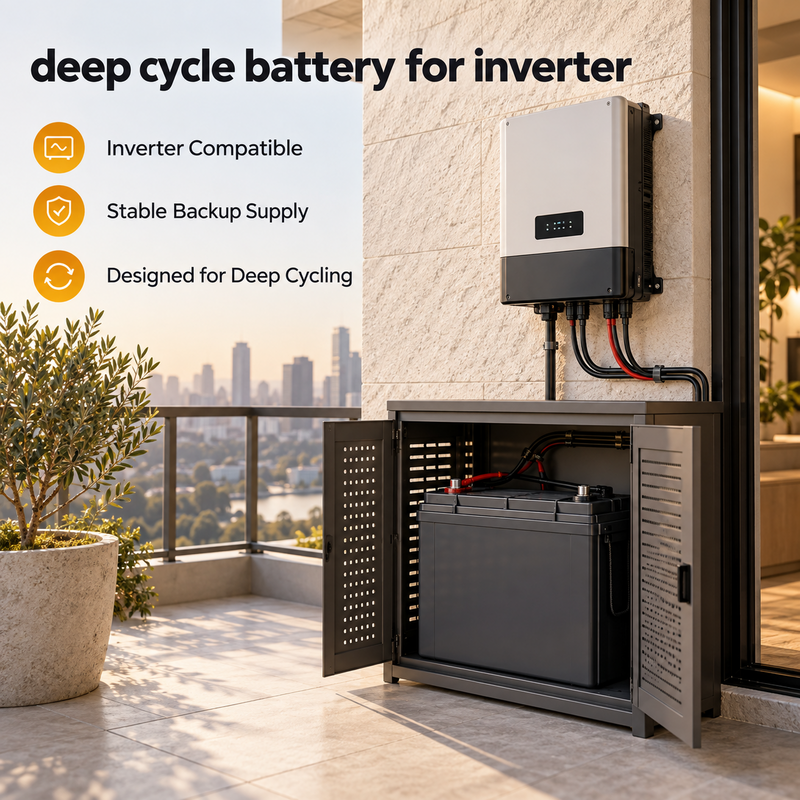
Deep Cycle Battery for Inverter Applications

5,000+ units ready stock, 1–5 days fast global delivery

application/deep-cycle-battery-for-inverter, application/deep-cycle-battery-for-inverter, 
Inquiry
Inquiry

deep cycle battery for inverter

Deep cycle batteries  for inverters are essential  components in  energy  storage systems, particularly in applications like solar energy,  RVs, UPS,  and marine systems. These batteries  are designed to provide a steady amount  of  power over an extended  period, making  them ideal for  situations where consistent energy delivery is crucial.  For B2B buyers, understanding the specifications, cost factors, and material advantages of deep cycle batteries is vital for making informed  purchasing decisions. This article will  cover  key insights into the wholesale purchasing process, specifications,  cost considerations, material advantages,  and diverse applications of LiFePO4 deep  cycle batteries.

 
Key Specifications of Deep Cycle Batteries for Inverter Applications

Key Specifications of Deep Cycle Batteries for Inverter Applications

Deep cycle batteries come with various specifications that directly  impact their performance.  Key specifications include capacity (measured in amp-hours), voltage, cycle life, and discharge  rates. For inverter applications,  a common configuration is a 12V or 24V battery  system, with varying capacities depending on the  energy needs  of the application.


Cycle life, which indicates  how many times the battery can  be discharged  and recharged before  its capacity significantly diminishes,  is particularly important.  A longer cycle life translates to  reduced replacement costs over time. Discharge rates  affect how quickly the battery can deliver power, which is crucial for applications requiring high bursts of energy, such as starting engines or powering heavy loads.

Furthermore, thermal management  is another critical consideration. Batteries must be capable of operating effectively within the temperature ranges expected in their application environments. Buyers should confirm that the chosen battery  specifications align with their  operational needs.


Cost Factors to Consider When Buying Deep Cycle Batteries Wholesale

The cost  of  deep cycle batteries can vary  significantly based on several factors. Material selection plays a crucial role; for instance, LiFePO4  batteries typically have a  higher  upfront cost  compared to lead-acid batteries but offer  longer  lifespan and better performance. Buyers should evaluate the total cost  of  ownership, which includes initial purchase price, maintenance costs, and replacement frequency.

Another cost factor is the battery design and  technology. Advanced features such as built-in Battery Management Systems (BMS) can enhance performance and safety  but may also increase costs. Buyers should weigh the benefits of these features against  their budget constraints.

Shipping costs  should  also be considered, especially for bulk orders. The weight and  size of deep cycle batteries  can impact  freight charges, and buyers should discuss packaging and shipping options with their supplier to optimize costs.


Understanding Material Advantages of LiFePO4 Deep Cycle Batteries

LiFePO4 (Lithium Iron Phosphate) batteries have several material advantages that make them a  popular  choice  for deep cycle applications. One  significant benefit is their thermal stability, which reduces the risk of overheating and fire compared to other lithium battery chemistries. This characteristic  is particularly  advantageous for applications in  warmer  climates or where batteries are used intensively.

Additionally, LiFePO4 batteries  have  a  longer cycle life, often  exceeding 2000 cycles at 80% depth of discharge, compared to only 300-500 cycles for traditional lead-acid batteries. This longevity  translates  to lower replacement costs and less environmental waste.

Another advantage is their higher efficiency,  with energy  losses during discharge and  recharge being significantly  lower than  other types. This makes them an excellent choice for applications where energy conservation is critical, such as solar energy systems.  Buyers should consider these material benefits when evaluating options for their specific applications.

From Solar to Marine Use

Deep cycle batteries are versatile and find applications across a range of industries, from renewable  energy systems to marine environments. In solar energy  systems, these batteries store excess  energy generated during peak sunlight hours for use  during low-light conditions, ensuring a reliable power supply. Buyers should ensure that the  battery capacity matches the energy generation and consumption patterns specific to their solar  setups.

In marine applications, deep cycle batteries provide reliable power for onboard systems, including navigation, communication, and  lighting. The ability to withstand harsh marine conditions, such as moisture and vibrations, makes selecting the right battery  crucial. Buyers should confirm that the  chosen battery  is rated for marine use and has appropriate protective features.

For recreational vehicles (RVs)  and uninterruptible power supplies  (UPS), deep cycle batteries are essential for maintaining power during transit and outages. Aspects such as weight, size, and mounting options should be considered to ensure  compatibility with the vehicle or UPS system.

understanding the intricacies of  deep cycle batteries for  inverter applications is essential for B2B buyers involved in wholesale purchasing. By focusing on  the  specifications, cost factors, material advantages, and diverse applications, buyers  can make informed decisions  that align with their  operational needs and budget constraints.

Wholesale Purchasing Insights for Deep Cycle Batteries in Bulk

When considering wholesale purchases  of  deep cycle batteries, buyers  should  focus on several critical factors.  Firstly, understanding  the minimum order quantity  (MOQ) is essential,  as it can  significantly impact pricing. Suppliers like Shenzhen Yanshuosheng Technology Co., Ltd. often have specific  MOQs based on production capabilities.


Additionally, buyers must evaluate the  lead time for  orders. This includes considering manufacturing  schedules, shipping times, and any potential  customs delays. Effective communication with the supplier regarding timelines is crucial to ensure that the  batteries arrive when needed.

Another important aspect  is the  quality assurance process. Buyers should request  information about the supplier's quality control measures and  certifications, such as UN38.3 and CE, which indicate compliance with safety standards. Understanding these processes will help buyers assess the reliability and safety of the products being purchased.

Get a Free Quote

Our representative will contact you soon.
0/1000