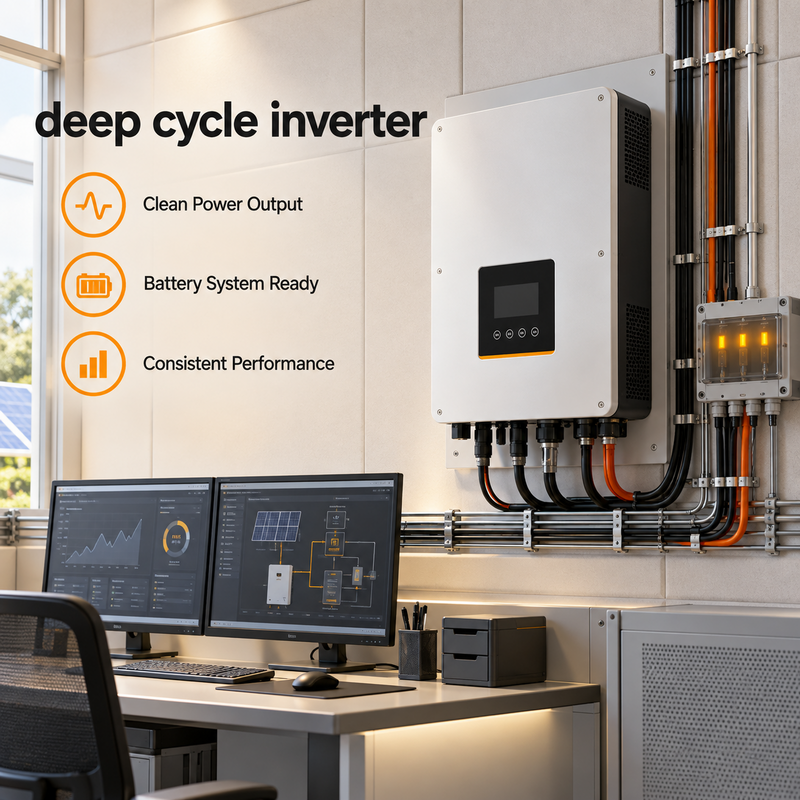
Understanding the Material Advantages of Our Deep Cycle Inverters
The materials used in manufacturing deep cycle inverters significantly influence their performance, efficiency, and longevity.
LiFePO4 Chemistry: Our inverters are designed to work seamlessly with LiFePO4 batteries, known for their thermal stability and safety. This chemistry can provide longer cycle life and higher discharge rates compared to traditional lead-acid batteries.
Durable Housing: The use of high-quality plastic or metal casings protects internal components from environmental factors, enhancing durability and ensuring reliable operation even in challenging conditions.
Advanced PCB Technology: Utilizing high-performance printed circuit boards (PCBs) minimizes electrical losses and enhances the efficiency of power conversion. The integration of smart technology in the PCB design can also allow for real-time monitoring and diagnostics.
In summary, understanding the specifications, installation challenges, quality indicators, application benefits, and material advantages of deep cycle inverters is crucial for making informed purchasing decisions. Whether for solar systems, RVs, or UPS applications, selecting the right deep cycle inverter can lead to significant long-term benefits.
 EN