Home Solar Battery System Overview and Guidance

5,000+ units ready stock, 1–5 days fast global delivery

application/home-solar-battery-system, application/home-solar-battery-system, 
Inquiry
Inquiry

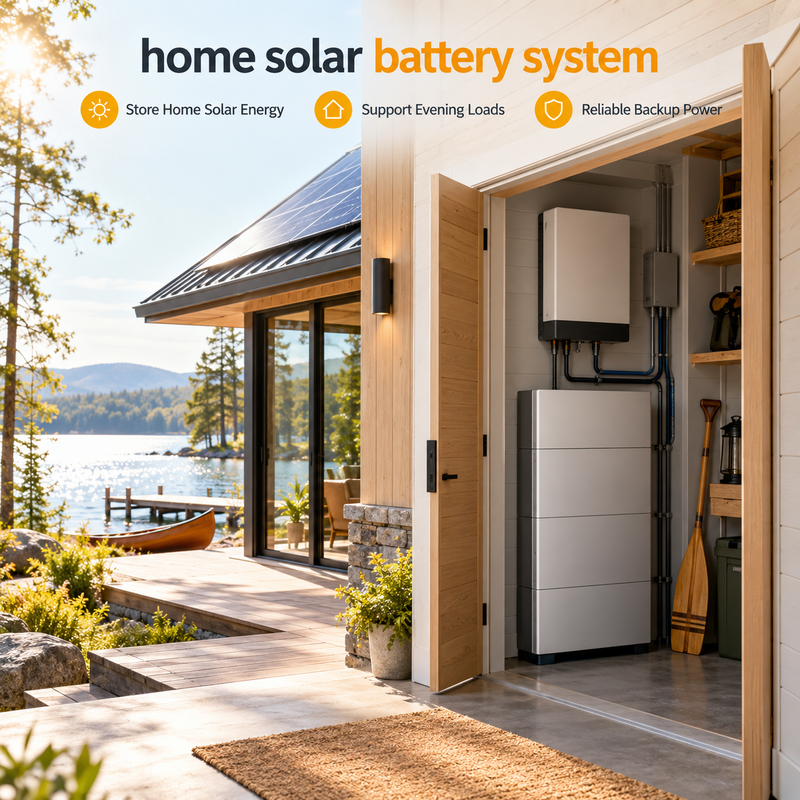
home solar battery system

Home solar battery  systems are essential components for  optimizing  energy use in residential solar  installations.  They store energy  generated by solar panels for later  use, allowing homeowners to  reduce dependence on the  grid, lower energy costs, and enhance  energy resilience  during outages. However, selecting  the right system involves understanding various specifications, installation requirements,  and potential challenges.  This article  will guide purchasing managers, engineers, and product  managers through  the key  considerations for choosing a home  solar battery system that meets their  needs.High Performance 50Ah LiFePO4 Lithium Ion Battery Pack Deep Cycle 12V High Efficiency Lithium Iron

Key Specifications to Evaluate in Solar Battery Systems

Key Specifications to Evaluate in Solar Battery Systems

Several critical specifications determine the performance and suitability of  home solar battery systems. Key metrics  include:

Capacity (kWh): This figure indicates how much energy the battery can store. Larger  capacities are ideal for households with higher energy demands or for those wishing to maximize solar energy use.


Depth of Discharge (DoD): DoD indicates the percentage of the battery's capacity that can be used  before recharging. A higher DoD (e.g., 90-100%)  allows for more usable energy, which is crucial for maximizing  efficiency.

Round-Trip  Efficiency: This percentage measures the energy output  compared to  the energy input during charging and discharging.  Higher  efficiency means less energy loss, making the system more cost-effective.

Charging and Discharging Rates:  Expressed in kilowatts (kW), these rates determine  how fast the battery can store and release energy.  Faster rates can be beneficial for households with sudden spikes in energy demand.

Safety Certifications: Certifications such as UN38.3 and CE ensure  that the battery meets safety and performance standards.  This can significantly impact reliability and insurance considerations.

By  understanding these specifications, buyers can better assess which  home solar battery system aligns with their energy needs and safety  expectations.

Installation Guidance for Home Solar Battery Systems

Proper installation  is crucial for optimizing  the performance  of home solar battery systems. It is recommended that installation be conducted by qualified professionals familiar  with local codes and regulations to  ensure compliance and safety.

Ensure that the  installation area is well-ventilated and  protected from extreme weather conditions. The battery should be installed in a location that is easily accessible  for maintenance and monitoring. This is especially important for  systems equipped with monitoring software, which can provide insights  into performance and  energy usage.

Before installation, buyers should confirm that all  components, including the solar inverter and  battery management system  (BMS), are compatible. It may also be beneficial to discuss potential future expansions with the installer, as this can influence the choice of system and location.


Lastly, familiarize yourself  with  operational and maintenance requirements post-installation. Regular monitoring  and maintenance can extend the lifespan of the battery  and  ensure consistent performance.

Common Problems with Home Solar Battery Systems and Solutions

While home solar battery  systems provide  significant benefits, they can encounter issues that  buyers should be aware of. Common problems include:

Battery  Degradation: Over time, all batteries lose capacity  and efficiency. Factors such as excessive heat, frequent  deep discharges, and  improper charging  can accelerate degradation.  To  counteract this, ensure optimal operating conditions and follow the manufacturer's charging guidelines.

Connectivity Issues: Communication failures between the  battery management system and other components can lead to performance issues. Regularly check connections  and software updates to ensure smooth operation.

Inadequate  Capacity: Some homeowners may find their battery system does not meet their energy  demands due to  underestimation of consumption. It is vital to  conduct  a thorough energy audit before installation to ensure the selected  capacity meets usage needs.

Installation Errors: Improper installation can lead to safety hazards or performance inefficiencies. Work with certified installers and adhere to  manufacturer guidelines to minimize this risk.

By proactively addressing these common issues, buyers can enhance the reliability and effectiveness of their home solar battery systems.


Exploring Applications of Home Solar Battery Systems in Various Sectors

Home solar battery systems are not solely for residential use;  they have a wide range of applications across  various sectors. In residential settings,  they enhance energy independence and reduce reliance on the grid. In RV and marine applications, these systems provide reliable power for off-grid adventures, allowing users to enjoy modern conveniences without sacrificing mobility.

In commercial settings, businesses  can utilize home solar battery systems to optimize energy costs, particularly during peak  demand times. By storing energy generated during off-peak hours, companies  can reduce their overall  energy bills and ensure a more consistent power supply.All-in-One Energy Storage System 5.5KW / 7.5KW Hybrid Cabinet for Large Homes


In sectors such as telecommunications and emergency services,  reliable energy storage  is essential  for maintaining operations during outages. Home solar battery systems can serve as backup  power sources, ensuring critical services remain uninterrupted.

Overall, the versatility of home solar battery  systems makes them an attractive option for various applications beyond traditional residential use, offering significant benefits in energy management  and cost savings.

In summary, selecting the  right home  solar battery system involves a careful evaluation of energy needs, specifications, installation requirements, and potential challenges.  By understanding these factors, purchasing managers  and engineers can make informed  decisions that enhance energy efficiency  and reliability.

Choosing the Right Home Solar Battery System for Your Needs

When selecting  a home solar battery system, the first step is to evaluate your energy  requirements. Consider factors such as daily energy consumption,  peak usage  times, and  the size of your solar panel installation. A battery's capacity, typically measured in kilowatt-hours (kWh), indicates how much energy it can store. For instance, a household that consumes 30 kWh daily might require  a battery system with a capacity of at least 10-15 kWh to  ensure sufficient backup during non-sunny hours.

Additionally, compatibility with your existing  solar setup  is crucial.  Ensure the battery system can integrate with your solar inverter and other  components, which may involve checking voltage and current specifications. Homeowners should also assess the  battery's discharge  rate, which influences how quickly energy can be supplied during high-demand  periods.Energy Storage Systems 3.6KW 5.5KW 24V 48V On/Off Grid Solar Inverter Pure Sine Wave Inverter MPPT Hybrid Inverters

Finally, consider  the battery's  lifespan and warranty. Lithium Iron Phosphate (LiFePO4) batteries, like those offered by Shenzhen Yanshuosheng Technology Co., Ltd., are known for their longevity and  safety. Look  for warranties that  cover at least 10 years or a specified number of cycles, which  can help in forecasting long-term energy storage costs.

Get a Free Quote

Our representative will contact you soon.
0/1000