Small Inverter for Home Energy Needs

5,000+ units ready stock, 1–5 days fast global delivery

application/small-inverter-for-home, application/small-inverter-for-home, 
Inquiry
Inquiry

small inverter for home

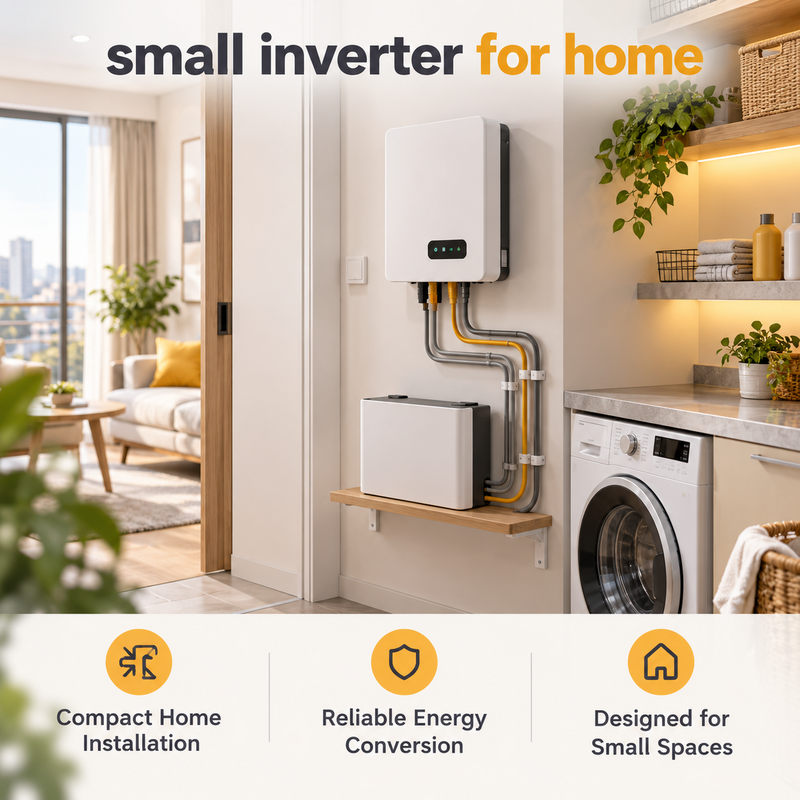
When considering  energy solutions for  residential applications, a small inverter  for home use is a critical component.  These devices convert DC power generated from renewable  sources,  such as solar panels, into AC power suitable for household  appliances.  B2B  buyers,  including purchasing managers and engineers, often prioritize factors like  efficiency, reliability, and compatibility with existing systems. This article  provides  essential insights into selecting the right small inverter,  its  key  features, material  advantages, and the applications within residential  energy storage  systems, helping you  make informed purchasing decisions. For a more comprehensive energy solution, consider exploring our All-in-One Energy Storage System 3KW / 5KW Hybrid Cabinet for Typical Homes.

Key Features for Home Applications

Key Features for Home Applications

When evaluating small  inverters for home  applications, several key features should be prioritized:

Built-in Protection Mechanisms: Look for inverters  equipped with  protection features that prevent overloads, short circuits, and over-temperature conditions. These  safeguards enhance the longevity and safety of both the inverter and connected appliances.

Pure Sine Wave  Output: Inverters can produce  either modified sine wave or pure  sine wave output. For sensitive electronics, such as computers and audio equipment, pure sine wave inverters are preferable  as  they provide cleaner power, reducing the  risk of damage or performance issues.

User-Friendly Interface:  A clear display and easy navigation are vital for monitoring performance and making adjustments. Features such as remote monitoring can also enhance usability, allowing  users to track energy production and consumption from their smartphones or computers.

Compact Design: Space considerations are essential in  residential settings.  Smaller, more efficient  designs can fit into tight spaces and still deliver robust  performance, making installation easier and less  obtrusive.

Scalability: As energy needs may change over time, consider inverters that allow for scalability.  This could mean the ability to connect multiple units or  expand the system with additional solar panels.

Material Advantages of Small Inverters

The  materials used  in small  inverters significantly affect their performance and longevity. High-quality components, such as aluminum housings, contribute to effective heat dissipation, critical  for maintaining optimal operating temperatures. This  durability is  especially important in residential environments where inverters may be exposed to  varying  temperatures.

Furthermore, the use of  advanced circuit  board materials ensures longevity and reliability.  These materials can withstand thermal  and electrical  stress, reducing the likelihood of failure  over time. Opting for inverters with  robust  connectors and wiring can also improve  efficiency  and reduce energy loss. When sourcing  small inverters, it’s advisable to inquire about the  materials used in their construction, as this can directly impact performance and maintenance.

Finding Trusted Manufacturers of Small Inverters

Identifying reliable  manufacturers of  small  inverters is crucial  for ensuring  product quality and performance. Start  by looking for companies with industry-specific  certifications, such as CE and UN38.3, which  indicate compliance with international safety  and quality standards.

Additionally,  consider manufacturers with a  proven track record in  the energy storage sector. Companies that specialize in LiFePO4 energy storage systems, like Shenzhen  Yanshuosheng Technology Co., Ltd., can offer valuable insights into the integration of their inverters with  energy storage solutions. It’s beneficial to assess their production  capabilities, including quality control processes and testing  protocols, to ensure that  the inverters meet your specifications. Consider exploring products like the Deep Cycle 12V 24V 50Ah 100Ah 200Ah LiFePO4 Lithium Ion Solar Energy Battery Storage Systems With BMS for integrated solutions.

Requesting references or case studies from previous clients can also provide insight into a manufacturer’s reliability and product performance. Furthermore, evaluate  their  customer service and support options, as responsive manufacturers can significantly ease the  purchasing and installation process.

Applications of Small Inverters in Residential Energy Storage Systems

Small inverters play a vital role in residential energy storage systems,  particularly in conjunction  with renewable energy sources. They facilitate the efficient conversion of solar energy into  usable AC power, making them essential for homeowners looking to optimize energy  consumption and reduce reliance on grid power.

In residential settings,  these inverters  can be used in various applications, such as powering household appliances, charging electric vehicles, and supporting backup power systems during outages. For instance, in a solar setup, a  small  inverter can manage the flow of energy between solar panels, batteries, and  home electrical systems, ensuring that energy is used efficiently  and effectively.

Moreover, small inverters can integrate  with smart home technologies, allowing users to monitor and manage energy usage remotely. This capability enhances energy efficiency and can lead to significant cost savings over time, making them an  attractive option for homeowners focused  on sustainability and  energy independence.

In summary,  understanding the specific needs and applications of small  inverters  for  home energy storage systems can empower B2B buyers  to make informed purchasing choices that align with their energy  goals.

Choosing the Right Small Inverter for Home Energy Needs

Selecting the  right small inverter for home energy needs involves understanding your energy requirements and the specific  characteristics of the inverter.  Key considerations include the inverter's power rating, which should align with the total wattage of the  appliances  you intend to power. Inverters are typically rated in watts, and  it's essential to consider both continuous and peak wattage—continuous  for regular  use and  peak for appliances with high  startup demands, such as refrigerators  or  air conditioners.

Additionally, assess the inverter's input voltage compatibility with  your energy source, whether it’s a solar panel system or another DC source. The efficiency rating is another crucial factor; higher  efficiency translates  to less energy loss during conversion, enhancing overall system performance. It's  also advisable to confirm  that the  inverter complies with  relevant  safety standards and certifications, ensuring reliability and safety during operation.

Get a Free Quote

Our representative will contact you soon.
0/1000