Choosing Solar Panels and Batteries for Home Use

5,000+ units ready stock, 1–5 days fast global delivery

application/solar-panels-and-batteries-for-home, application/solar-panels-and-batteries-for-home, 
Inquiry
Inquiry

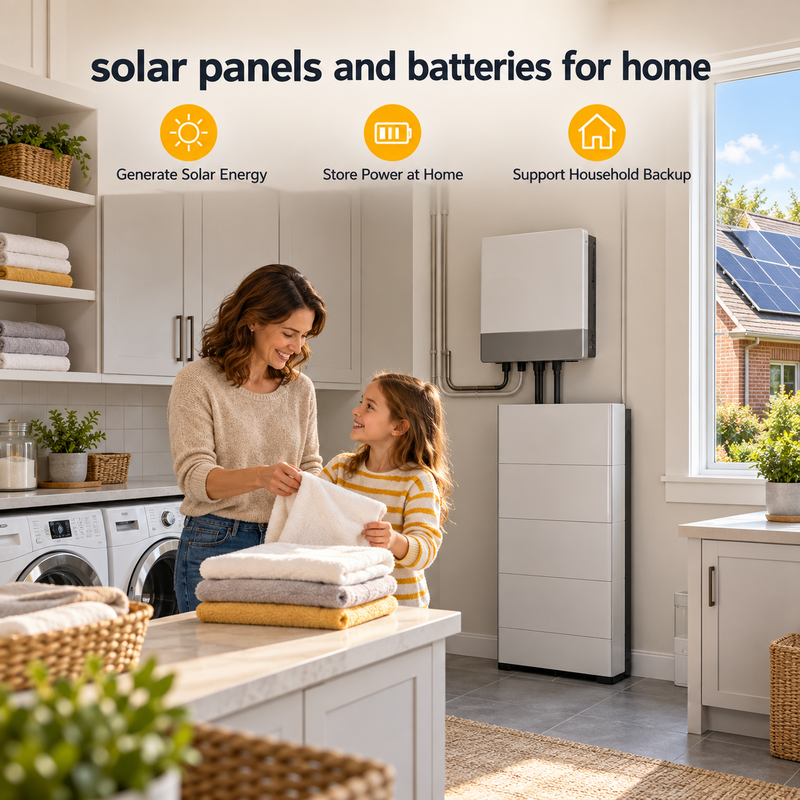
solar panels and batteries for home

As homes increasingly seek  energy independence  and sustainability, the integration of solar panels and  batteries for  home use has  become a focal point for  residential energy  solutions. These systems not  only  allow homeowners to harness  renewable energy but also enable them  to store excess energy for later use,  enhancing energy  reliability  and efficiency. For B2B buyers,  understanding  the nuances of selecting the right solar  panels and batteries  is  crucial, particularly when considering quality, compatibility, and long-term performance.  This article will provide insightful guidance on choosing the right products, evaluating quality, and addressing common issues related to solar energy systems.

How to Evaluate the Quality of Solar Energy Storage Solutions

How to Evaluate the Quality of Solar Energy Storage Solutions

Quality assessment of solar energy storage solutions involves several key aspects. Begin by reviewing certifications such as UN38.3 and CE, which indicate compliance with international safety and performance standards. These certifications, held by reputable  manufacturers like Shenzhen Yanshuosheng Technology Co., Ltd., assure buyers of the product's  reliability  and safety.

Examine the  warranty and expected lifespan of the solar panels and batteries.  Many manufacturers  offer warranties ranging from 10 to 25  years, reflecting confidence in their product durability. A longer warranty  typically indicates a higher  quality product.

Additionally, perform a  thorough  inspection of the physical  characteristics of the batteries, such as build  quality, connectors, and casing. High-quality batteries will have robust construction, minimizing  the risk of damage from environmental  factors.  It's  also advisable to look at user reviews  and case studies to gauge real-world  performance and customer  satisfaction.

Comparing Specifications of LiFePO4 Batteries for Residential Needs

When comparing LiFePO4 batteries, focus on  several critical specifications. First, capacity is a primary consideration; it determines  how much energy can be stored. Look for batteries that can  handle the expected daily energy usage, and consider whether you may want to  expand the system in the future.

Next, evaluate the discharge depth (DoD), which indicates  how much of the battery's capacity can be used without  affecting its lifespan. A  higher DoD allows for more  usable energy but may also impact the overall cycle life of the battery.

Cycle life is another vital  specification, as it  indicates how many charge and  discharge cycles the battery can endure  before its  capacity significantly diminishes. High-quality LiFePO4 batteries can typically achieve 3,000 to 5,000  cycles, making  them ideal for  residential  use.

Finally, consider the efficiency ratings, which reflect how effectively a battery can  store and deliver energy. An efficiency rating above 90% is generally desirable,  indicating minimal energy loss  during the charging and discharging processes.

Common Problems with Solar Energy Systems and Their Solutions

Solar energy systems  can face  several common issues that may affect their performance. One frequent problem is insufficient  energy generation due  to shading or dirt accumulation on solar panels. Regular cleaning and maintenance, along with strategic panel placement, can mitigate this issue.

Another challenge is battery degradation over time, which can lead to reduced  energy storage capacity. To counter this, select high-quality  batteries  with  good cycle life and implement a monitoring system to track battery performance and health.

Inverter issues  can also arise, particularly with compatibility and efficiency. Ensure that  the inverter is appropriately sized for the system and check its efficiency ratings. Upgrading to a  high-efficiency inverter may improve overall system performance.


Lastly, improper installation can lead to  various operational problems. It's crucial to engage  experienced  installers  familiar  with local  regulations and best practices to ensure the system  operates optimally from the start.


Bulk Order Options for Solar Panels and Batteries for Distributors

For distributors  seeking bulk orders  of solar panels and batteries, it's essential to establish clear communication with suppliers about  specific  needs and requirements. Begin by determining the anticipated order volume and frequency, as this will influence pricing and  lead times.

Inquire about minimum order quantities (MOQs), as manufacturers may have specific  thresholds for  bulk orders. Discuss customization options, such as branding or packaging requirements, which can enhance  product appeal  in  the market.

Evaluate the supplier's production capacity to ensure they can meet your demand consistently. A reliable supplier will have robust quality control processes in place,  ensuring that each batch of products meets the required  specifications.

Furthermore, consider the logistics of shipping and handling, especially  if the  products are being shipped internationally. Ensure that the supplier can provide the necessary  documentation and support for smooth customs  clearance  and delivery.

By following these guidelines, distributors  can effectively navigate the complexities of sourcing solar panels and  batteries for residential applications, ensuring they meet the needs of their clients while optimizing  their purchasing strategy.

Choosing the Right Solar Panels and Batteries for Home Use

When selecting solar panels and batteries for residential applications, several factors must be considered. First, evaluate the energy needs  of the home. This includes understanding the average daily energy consumption, typically measured in kilowatt-hours (kWh). For instance, a household that  consumes around  30 kWh per day  may require a solar  panel system capable of generating this amount, factoring in inefficiencies and seasonal variations.

Next, consider the type of solar  panels available.  Monocrystalline panels are known for their  efficiency and space-saving benefits, making them ideal for  homes with limited  roof space. Conversely, polycrystalline panels may offer a  more cost-effective solution but generally require more space for installation.

Regarding battery  selection, LiFePO4 batteries, like those manufactured by Shenzhen Yanshuosheng Technology Co., Ltd., stand out for their safety, longevity, and performance stability. These batteries have a longer cycle life  compared to traditional lead-acid batteries, making them a smart investment for residential energy storage. Assess the  battery's capacity, measured  in ampere-hours  (Ah), to ensure it aligns with  the anticipated energy usage and the solar panel output.

Compatibility between solar panels and batteries is also essential. Ensure the battery management system (BMS) is compatible with the solar inverter  and  that the  voltage levels match across the system. This compatibility ensures efficient energy flow and maximizes system performance.

Get a Free Quote

Our representative will contact you soon.
0/1000