Choosing Backup Solar Power for Home Applications

5,000+ units ready stock, 1–5 days fast global delivery

application/backup-solar-power-for-home, application/backup-solar-power-for-home, 
Inquiry
Inquiry

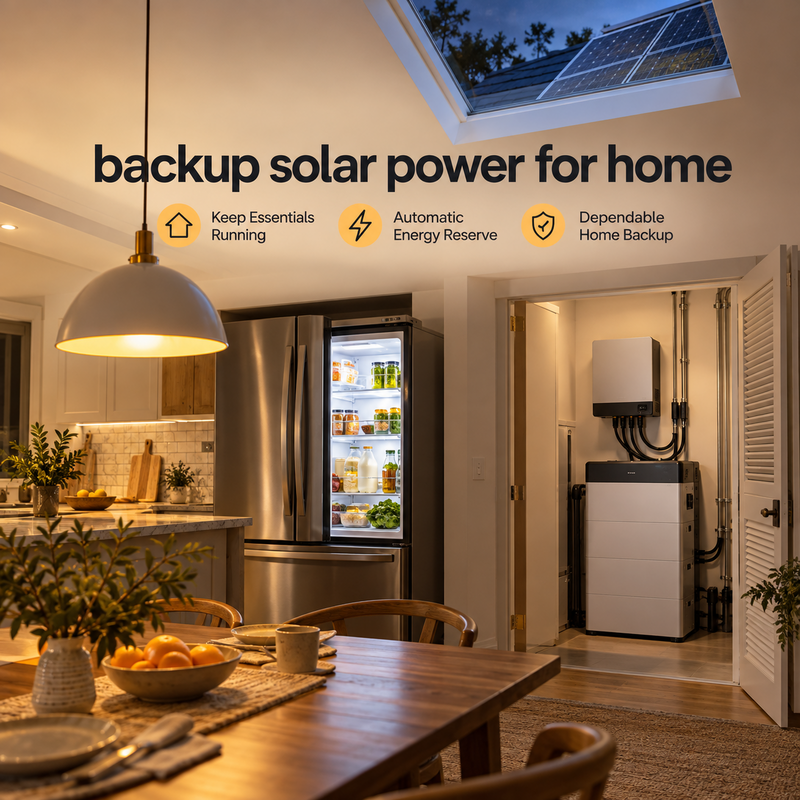
backup solar power for home

Backup solar power systems  for  homes  are becoming  increasingly essential as energy independence and  sustainability gain traction.  These systems  typically leverage  advanced LiFePO4 (Lithium Iron Phosphate) energy storage technologies to provide reliable power during outages  or peak energy demand  periods. For purchasing managers  and distributors, understanding  the nuances  of  backup solar power for home applications is crucial.  This article will delve  into the key considerations when  selecting a system, evaluating quality, understanding cost factors, installation guidance, and troubleshooting  common  problems.

 
How to Evaluate Quality in Backup Solar Power Systems

How to Evaluate Quality in Backup Solar Power Systems

Quality assessment  of backup solar power systems  is pivotal  for ensuring  long-term reliability and performance. Here are key  aspects to evaluate:

Battery  Chemistry: LiFePO4 batteries are  known for their safety, longevity, and  thermal stability.  They typically have  a longer cycle  life compared to  other lithium-ion batteries, making them a reliable choice for home energy storage.

Construction and Design: Inspect the build quality of the battery and associated components. Look for  robust casing materials that can withstand environmental stresses. A well-designed battery  management system (BMS) will also optimize charging and discharging  cycles, prolonging battery life.

Performance Metrics: Evaluate specifications such as charge/discharge efficiency, cycle life, and temperature range. These metrics directly impact how effectively the system will  operate in  different conditions.

Warranty  and Support: A comprehensive warranty indicates manufacturer confidence in the product's durability. Ensure the supplier offers  good customer support for technical inquiries and  service.

Cost Factors to Consider When Buying Backup Solar Power

Understanding  the cost implications is vital  for  making informed purchasing decisions. Here  are several factors that influence the overall cost:

Initial Investment: The initial purchase price of the backup solar  power system can vary significantly based on capacity, technology, and brand  reputation.  Assess  different options to find a balance between quality and cost.

Installation Costs: Installation can add  to the overall expense. Factor in any additional components needed for integration  with existing solar  systems,  as well as labor costs for professional  installation.

Long-term Savings: While  upfront costs are important, consider  the long-term savings on electricity bills and the potential for government incentives or rebates for using renewable energy systems. Using a system like the Energy Storage Systems 3.6KW 5.5KW 24V 48V On/Off Grid Solar Inverter can contribute to these savings.

Maintenance Requirements: While LiFePO4 systems  typically require less maintenance than traditional lead-acid batteries, it's still  essential to  budget for any periodic checks or servicing that may be  required to maintain optimal performance.

Installation Guidance for Backup Solar Power Systems at Home

Proper installation  is crucial for the efficient operation  of your backup solar power  system. Here  are steps to  guide you:

Site Assessment: Conduct a thorough assessment  of the installation site. This includes evaluating sunlight exposure, proximity to the  main electrical panel, and accessibility  for maintenance.


Professional Installation:  Engage certified professionals for installation to ensure compliance with local electrical codes and safety standards. Proper installation will enhance system performance and longevity.

System Configuration: Configure the system based on your energy needs. This may involve integrating the backup  system with existing solar panels and ensuring  all components are compatible.

Testing:  Once installed, conduct comprehensive testing to  verify that  the system  operates as intended. Check  that it properly interfaces with your solar array  and effectively manages  energy storage and distribution.


Common Problems with Backup Solar Power and Their Solutions

Even the best backup solar power systems can encounter issues. Here are some common problems and  their potential solutions:

Insufficient Energy Storage: If the system fails to store enough energy, evaluate your energy consumption patterns and consider upgrading  to  a larger capacity system. Regular monitoring of energy use can help identify consumption spikes.


Battery Performance Issues: If batteries are not charging or discharging correctly, inspect the  BMS for faults. Also, ensure that  the system is operating within the recommended temperature range, as extreme temperatures  can  affect battery performance.

System Compatibility Problems: Sometimes,  integration with existing systems can lead to issues. Ensure  that all  components  are compatible and consult with your supplier for troubleshooting guidance.

Maintenance and  Upkeep: Regular inspections and maintenance checks are essential to  prevent performance  degradation. Follow the manufacturer's recommendations for  routine maintenance to ensure longevity and reliability.

By understanding these  aspects of backup solar power for home applications, purchasing managers and distributors can  make informed decisions that  meet their operational needs while ensuring  long-term reliability and efficiency.

Choosing the Right Backup Solar Power for Home Applications

Selecting the right backup solar power system  involves assessing your specific needs and application requirements. Consider the following factors:

Energy Storage Capacity: Determine how much energy you  need to store based on your household consumption. A typical home requires a system that can support essential appliances during an  outage. Consider systems with a capacity measured  in kilowatt-hours (kWh) that aligns with  your energy usage patterns. For instance, options like the High Performance 50Ah LiFePO4 Lithium Ion Battery Pack Deep Cycle 12V High Efficiency Lithium Iron can be ideal for such needs.


Compatibility with Existing Systems: Ensure  that the backup solar  power system is compatible with your current solar panel  setup. Systems like those offered by Shenzhen Yanshuosheng Technology Co.,  Ltd. feature  independent Battery Management Systems  (BMS)  that enhance compatibility with various solar energy  systems.

Application  Suitability: Assess whether the system will primarily serve residential  needs or if it will also support other  applications such as RVs,  marine  use, or UPS systems. This understanding will guide you in selecting the appropriate specifications.

Regulatory Compliance: Check for necessary certifications such as UN38.3 and CE, which ensure safety and reliability. Compliance with these standards is essential for both legal and operational assurance.


Get a Free Quote

Our representative will contact you soon.
0/1000