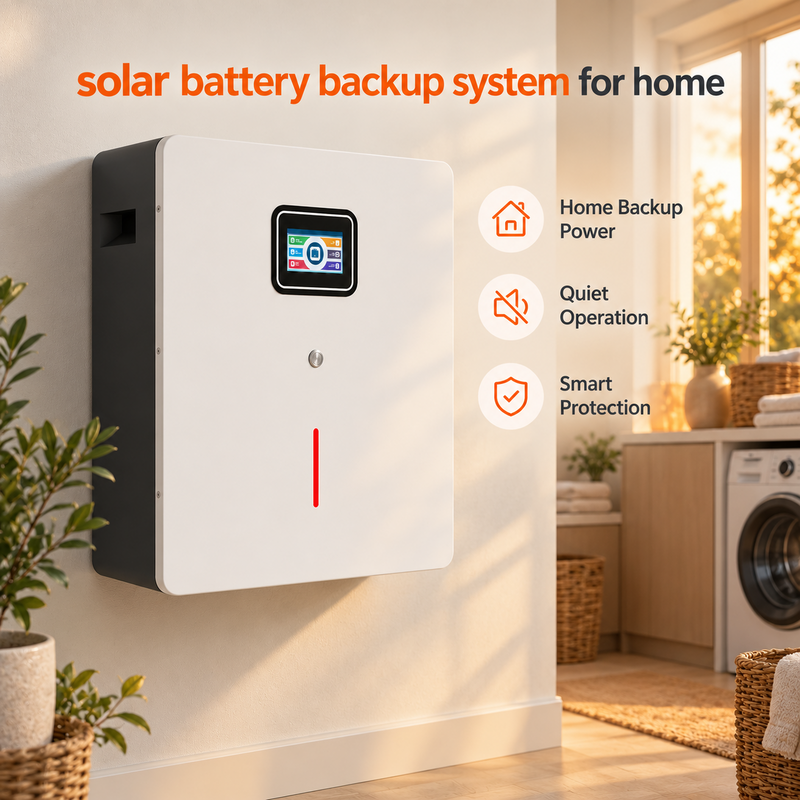
Choosing the Right Solar Battery Backup System for Home

5,000+ units ready stock, 1–5 days fast global delivery

application/solar-battery-backup-system-for-home, application/solar-battery-backup-system-for-home, 
Inquiry
application/solar-battery-backup-system-for-home, application/solar-battery-backup-system-for-home, 
Inquiry

solar battery backup system for home

A solar battery backup system for home is an essential component for  homeowners looking to enhance energy  resilience and  independence. This  system stores energy generated from solar  panels, allowing households  to power  their appliances  during outages  or at night. For B2B buyers—such as  purchasing  managers,  engineers, and product  managers—key considerations include system compatibility,  capacity,  efficiency, and installation requirements.  This article will guide you  through selecting the right solar battery  backup system, understanding  critical specifications, evaluating  quality, and addressing common installation challenges.

Key Specifications of Our Solar Battery Backup Solutions

Key Specifications of Our Solar Battery Backup Solutions

Understanding key specifications is crucial to selecting the right solar battery backup system.  Here are some essential specifications to consider:

Battery Capacity:  Measured in kilowatt-hours (kWh),  it indicates how much energy the battery can store. A higher capacity allows for  longer backup times.

Depth of Discharge (DoD): This specification indicates how much of the battery's total capacity  can be used without significantly shortening  its  lifespan.  A  higher DoD  means more usable energy.

Round-Trip Efficiency: This reflects the energy  efficiency of the system, showing how  much energy is lost during the charging and discharging process. A system  with around 90-95% efficiency is ideal.

Cycle Life: This refers to the number of charge and discharge cycles a battery can undergo  before  its capacity significantly diminishes. Lithium batteries often have a  cycle life of 2000-5000 cycles.

Operating Temperature Range: Ensure that the battery can operate effectively within  the  temperature range typical for your region to avoid performance issues.

These specifications help in evaluating the performance  and suitability of the solar battery  backup system for specific residential applications.

Evaluating the Quality of Solar Battery Backup Systems for Homes

Quality evaluation of solar battery backup systems involves several steps.  First, verify  certifications such as UN38.3 and CE, which indicate compliance with international safety  standards. These certifications are critical, especially  for lithium batteries, as they  ensure the product has undergone rigorous testing for safety and performance.


Next, assess the manufacturer’s quality control processes. A reliable  supplier should provide details about their production  capabilities, including  the  use of advanced manufacturing equipment and quality inspection measures. For instance, Shenzhen Yanshuosheng Technology Co., Ltd.  employs independent Battery Management  Systems (BMS) to enhance battery  safety  and performance.

Finally, read customer  reviews  and case studies to gauge real-world performance. Feedback from other  users can highlight potential issues and the overall  reliability of  the product. Comparing products from multiple manufacturers can  also provide insight into which systems consistently meet high standards.

Installation Guidance for Solar Battery Backup Systems at Home

Proper installation of a solar battery backup system is  crucial for optimal performance. First,  engage a qualified  technician  to evaluate  your current solar setup and assess the best location  for  the battery installation, taking into  account factors  such as  ventilation and accessibility.

Installation typically involves integrating the battery with your solar inverter, which may require  additional wiring and configuration. Ensure that the installation adheres to local codes and regulations to guarantee safety and compliance.

After installation, conduct  a  thorough  system check. Test the battery’s charging  and discharging functions  to  confirm that it operates correctly  within the intended  parameters. It’s also advisable to educate the homeowner about the  system’s operation, maintenance, and monitoring options to maximize its benefits.

Common Problems with Solar Battery Backup Systems and Solutions

While solar battery backup systems are robust, users may encounter common issues. One frequent  problem is insufficient  battery capacity during peak usage times. To address this, ensure that  the selected  battery capacity  aligns with the household’s energy consumption patterns and consider future energy demands.

Another issue can be related to battery degradation over time. Regular  monitoring of battery health and  capacity can help users detect degradation  early. Implementing a maintenance schedule that includes checking connections,  cleaning terminals, and  ensuring firmware updates can prolong battery life.

Finally, installation errors can  lead to performance  inefficiencies.  Engaging  qualified professionals for installation and periodic  maintenance checks is essential  to prevent issues that stem from improper  setup.

By following these guidelines for selecting, installing, and monitoring a  solar battery backup system  for home use, buyers can make informed decisions  that enhance energy resilience and support sustainable living.

Choosing the Right Solar Battery Backup System for Your Home

When selecting a solar battery backup system for your home, several factors come  into play. First, assess the energy needs  of  the  household. Calculate your average  daily energy consumption to determine the battery capacity required. For instance, a family using 30 kWh per day will need a system that  can store enough energy to meet that demand, typically  around 10-15 kWh of usable capacity for effective backups.

Next, consider the type of  battery technology. Lithium Iron Phosphate (LiFePO4) batteries, like those produced by Shenzhen Yanshuosheng Technology  Co., Ltd., are known  for their safety,  longevity, and efficiency, making them a popular choice for residential applications. Additionally, ensure that the  solar battery backup system is compatible  with your existing solar inverter  and can integrate seamlessly into  your current energy setup.

Lastly, price and warranty should  influence your  decision. A higher initial investment may yield better long-term savings  and reliability. Look for systems that offer comprehensive warranties, which indicate the manufacturer's confidence in their product’s  longevity and  performance.

Get a Free Quote

Our representative will contact you soon.
0/1000