Home Solar Battery Solutions for Energy Efficiency

5,000+ units ready stock, 1–5 days fast global delivery

application/home-solar-battery, application/home-solar-battery, 
Inquiry
Inquiry

home solar battery

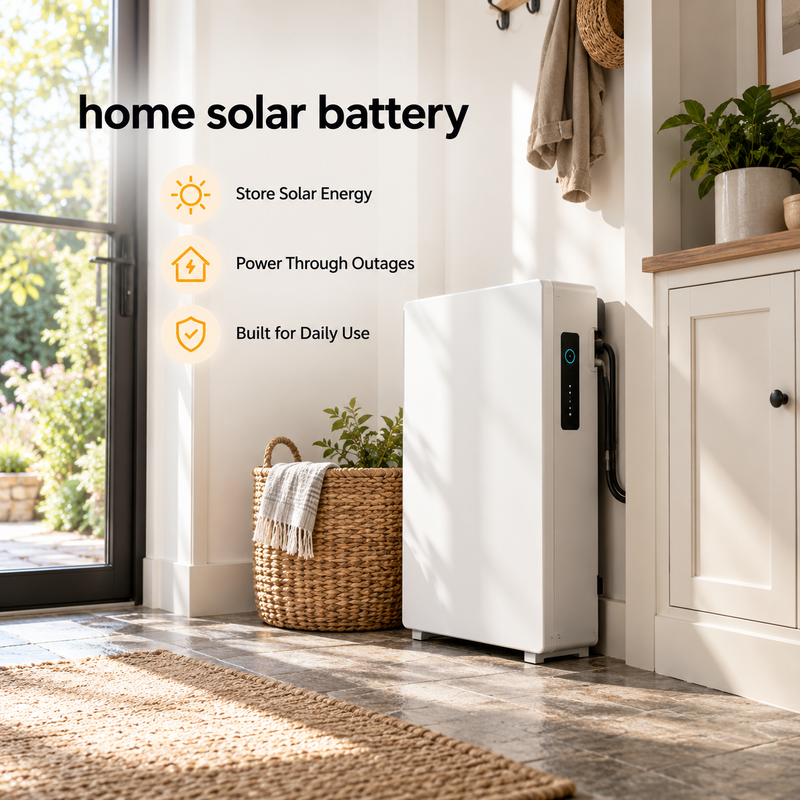
Investing in a home solar battery  is a pivotal decision  for buyers looking to enhance energy efficiency and sustainability  in  residential applications. A home solar battery serves as a  storage solution for energy generated  from solar panels,  enabling users to harness renewable energy, reduce reliance on  grid power,  and lower electricity  costs. Key concerns for B2B buyers,  such as  purchasing managers  and product  managers, include selecting the right product, understanding specifications, and evaluating supplier reliability. This article aims  to provide essential insights  into home  solar battery solutions,  from selection criteria to technical specifications, helping buyers make  informed  decisions.

Where to Source Reliable Suppliers for Home Solar Battery Systems

Where to Source Reliable Suppliers for Home Solar Battery Systems

Finding a trustworthy supplier for home solar batteries is crucial for ensuring  product quality and reliability. Start by researching manufacturers with a strong reputation in the  industry.  Look for  suppliers  that offer comprehensive product  information, including detailed specifications and  certifications.

Trade shows  and industry conferences are excellent venues  to connect with potential suppliers  and assess their offerings firsthand.  Additionally, consider leveraging online B2B marketplaces and  industry-specific directories that list verified suppliers. Reading customer reviews and testimonials can provide insights into the reliability and performance of products and services.

Engaging with industry associations can  also help  identify reputable suppliers.  These organizations often have resources that highlight manufacturers known  for high-quality products. Once potential suppliers are identified, request quotes and product samples to assess  the quality  and suitability  of their home solar battery systems before making  a commitment.

Key Specifications to Compare in Home Solar Batteries

When comparing home solar batteries, several specifications are critical to ensure the selected product meets the intended application requirements. Key specifications include:

Capacity (kWh): Determines how much energy  can be stored. Match the capacity to the household's peak energy usage.

Depth of Discharge (DoD): Higher DoD percentages allow for more usable energy, leading to better efficiency and performance.

Cycle Life: Indicates the number  of  charge and discharge cycles the battery can endure. A higher cycle life translates  to  a longer-lasting battery.

Round-trip Efficiency: The ratio of energy output to input. Higher  efficiencies lead to cost savings over the  battery's lifespan.

Operating Temperature Range: Ensures the battery can operate effectively in various climates. Extreme temperatures  can  affect  performance and  longevity.

Dimensions and  Weight: Important for installation considerations. Ensure the battery fits the available space in  the intended location.

Warranty: Check the warranty period and terms, which can indicate the manufacturer's confidence in their product's  durability.

Evaluating these specifications allows buyers  to  make informed comparisons and select the most suitable home  solar  battery for their  needs.


Applications of Home Solar Batteries in Various Industries

Home solar batteries have  applications that  extend beyond  residential use, impacting various industries. In the renewable energy sector, they play a crucial role in integrating solar power into the energy grid, helping to stabilize  supply and demand.

In the  commercial sector, businesses utilize solar batteries to manage peak  demand charges and reduce energy costs. This is particularly relevant  for companies that operate during peak hours when electricity rates  are highest.

In the transportation sector, electric vehicle  (EV)  owners can benefit from home solar batteries  by using stored solar energy to  charge their vehicles, minimizing reliance on  the grid and reducing overall emissions. Furthermore, buyers may want to consider the Energy Storage Systems that can complement their solar battery solutions.

Additionally, industries  such as  marine  and recreational vehicles (RV) leverage home solar batteries to  provide off-grid power solutions. This versatility highlights  the growing  importance of solar battery technology across multiple  applications.

Material Advantages of LiFePO4 in Home Solar Battery Systems

Lithium Iron Phosphate (LiFePO4) batteries are increasingly preferred in home solar battery systems due to their unique material advantages.  One key benefit is their thermal stability, which significantly reduces the risk of overheating or combustion compared  to other lithium-ion chemistries. This makes LiFePO4 batteries safer for  residential applications.

Moreover, LiFePO4 batteries  have a longer cycle life, typically exceeding 2,000 cycles,  which translates to better  longevity and lower replacement costs over time. Their flat discharge  curve ensures consistent performance, providing reliable power until the battery is nearly  depleted.

Another advantage  is the environmental aspects of LiFePO4. Unlike other lithium-ion batteries, LiFePO4 does not contain  toxic heavy metals, making it a more environmentally  friendly  option.  This aligns with  the increasing demand for sustainable energy  solutions.

In summary, choosing LiFePO4  batteries for home solar storage not  only enhances safety and longevity but  also contributes positively to environmental sustainability, making  them an excellent choice for both residential  and commercial applications.

What to Consider When Choosing Home Solar Battery Solutions

When selecting a home solar battery, buyers should consider several factors to ensure optimal performance, compatibility, and cost-effectiveness. First, evaluate the  storage capacity, typically measured in kilowatt-hours (kWh), which indicates how much energy the battery can store for later  use.  This capacity should align with the household's  energy  consumption patterns. Additionally, buyers may want to explore options such as the High Performance 50Ah LiFePO4 Lithium Ion Battery Pack Deep Cycle, which offers enhanced efficiency.

Next, assess  the battery's depth of discharge  (DoD), which  represents the percentage  of  the  battery that can be used without damaging it. A higher DoD allows more usable energy,  enhancing  efficiency. Additionally, consider the  battery's cycle life, which  indicates how many charge and discharge cycles the battery can undergo before its capacity significantly diminishes. A longer cycle life generally translates to better long-term value.

Buyers should  also evaluate the battery's round-trip efficiency, representing the usable energy output compared to the energy  input. Higher efficiency rates reduce overall energy costs and increase savings. Lastly,  consider safety certifications, such as UN38.3  and CE, which indicate compliance with international safety standards.


Get a Free Quote

Our representative will contact you soon.
0/1000