Choosing the Right Household Solar Battery

5,000+ units ready stock, 1–5 days fast global delivery

application/household-solar-battery, application/household-solar-battery, 
Inquiry
Inquiry

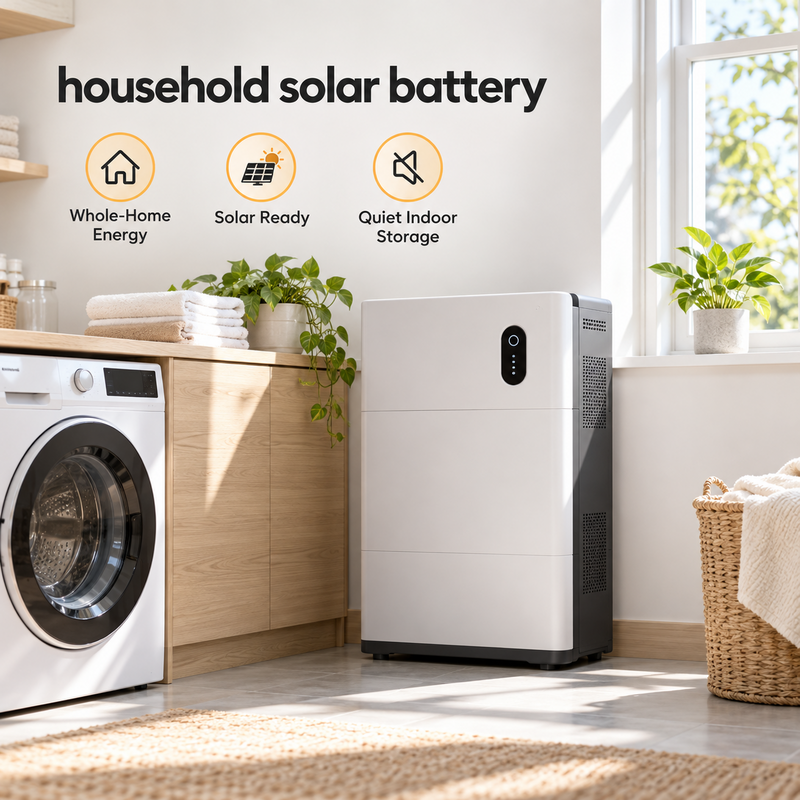
household solar battery

Household solar batteries represent a significant  advancement in energy storage technology, particularly for  residential  applications. These systems, primarily utilizing lithium iron phosphate (LiFePO4) technology,  offer reliable,  long-lasting energy solutions for homeowners aiming  to harness  solar power. As  buyers consider investing  in a household solar battery,  key concerns often  include capacity, efficiency, compatibility  with existing solar systems, safety features, and pricing. This article will guide potential  buyers through selecting the right  household solar battery, understanding wholesale  purchasing  options, navigating  installation challenges, exploring various applications, and  comparing material  advantages.

 
Wholesale Purchasing Options for Household Solar Battery Suppliers

Wholesale Purchasing Options for Household Solar Battery Suppliers

For businesses looking  to procure household solar batteries in bulk, understanding wholesale purchasing options is essential. Suppliers like Shenzhen Yanshuosheng Technology Co., Ltd. offer various wholesale arrangements that can be tailored to meet specific needs.  When  requesting quotes,  buyers should  provide detailed information, including the desired battery model, capacity,  and quantities. This will help suppliers offer accurate pricing and lead  times.


Many manufacturers provide  minimum  order quantities (MOQ), which can vary significantly. It’s advisable to confirm these requirements upfront to  avoid any unexpected issues during the ordering process. Additionally, inquire about customization options, as many suppliers can tailor battery specifications  to  meet specific  applications, such as RV, UPS, or marine uses.

Pricing can be influenced by several factors, including order volume, customization  requirements, and payment terms. Engaging  in  discussions about long-term  partnership agreements may  also yield better pricing and terms.  Thus, establishing a strong relationship with the supplier can lead to favorable conditions and improved service.

Common Installation Challenges with Household Solar Batteries

Installing household solar batteries can present  several challenges that buyers should be aware  of. One common issue is ensuring proper placement and ventilation. Batteries should be installed in a well-ventilated area to prevent overheating, which can affect  performance and lifespan.  Additionally, installation locations  must comply with local building codes and  regulations.

Electrical compatibility is another area where difficulties may  arise. Buyers must ensure that their existing electrical systems  can support the new battery. This may involve upgrading inverters or wiring to  accommodate the  battery's specifications.  Working with a qualified electrician familiar with solar systems can mitigate these challenges.

Moreover, proper integration  with the solar panel system is  vital. If the batteries are not correctly configured  with the solar inverter,  it can lead to  inefficiencies or even system failures. Ensuring that the  installation team has  experience with household solar batteries  and their specific integration requirements is  crucial for a successful setup.

Applications of Household Solar Batteries in Various Industries

Household  solar batteries have diverse applications  beyond residential use. In the  commercial sector, businesses utilize these batteries for energy storage to reduce electricity costs and enhance energy reliability. For example, retailers can store energy generated during the day to use during peak demand times, lowering their overall energy expenses.

In the RV and marine industries, these batteries are  popular for their lightweight design and long cycle life. They provide  reliable power for  off-grid adventures, ensuring that essential appliances and devices remain operational without relying on traditional fuel sources.  Their robust  performance  in varying conditions makes  them ideal for these environments.

Additionally, backup power solutions for critical infrastructure are  increasingly common. Hospitals, data centers, and emergency response  facilities benefit from household solar batteries as they  provide a stable power supply  during outages. This  application highlights the  importance of selecting batteries with high reliability and  safety certifications, such as  the UN38.3  and CE certifications offered by manufacturers like Shenzhen Yanshuosheng Technology Co., Ltd.


Comparing Material Advantages in Household Solar Battery Technologies

When assessing household solar batteries, material composition plays  a pivotal role in performance and safety. Lithium iron phosphate (LiFePO4) is a popular material choice due to its thermal  stability  and longer cycle  life compared to other lithium-ion  chemistries. This stability reduces the risk of thermal runaway, making LiFePO4 batteries safer for  residential use.

Another consideration is the environmental impact of the materials used. LiFePO4 batteries  are known for being  less harmful to the environment compared to lead-acid alternatives, which  can contain toxic substances. This aligns with the growing emphasis on sustainability in  energy solutions.

Additionally, the energy  density of the battery is influenced by its material composition. Higher  energy density allows for more energy storage in a smaller footprint, which is particularly beneficial for residential applications with space constraints. Buyers should assess the specific  energy density ratings  provided by manufacturers and consider how these ratings align with their energy storage needs.

As a B2B buyer, understanding the nuances of battery materials can significantly  impact purchasing decisions. It is advisable to discuss these specifications  with suppliers to ensure that  the selected battery meets both performance and safety  standards pertinent to  the  intended application.

How to Choose the Right Household Solar Battery for Your Needs

Selecting the appropriate household solar battery involves  evaluating several important factors. The first is capacity, measured in kilowatt-hours (kWh),  which indicates how much energy the battery can store. Buyers should assess their daily  energy consumption to determine the required capacity. For instance, a household using 10 kWh per day may require a battery with at least that capacity to ensure  sufficient energy storage.

Another  critical specification is the battery's depth of discharge (DoD),  which indicates how much  of the battery's capacity can be effectively used. A higher DoD allows for more usable energy,  enhancing overall efficiency. Additionally, consider the battery's cycle life, which  refers to the number of charge and discharge cycles  it can undergo  before its capacity diminishes significantly. A battery with a higher  cycle life is more economical in the long run.

Compatibility with existing  solar systems is also crucial. Ensure that the battery's  voltage and  inverter  specifications align with your solar  panel  system.  Buyers  should confirm whether the battery's management system (BMS) integrates effectively with their solar setup, as this can impact performance and efficiency.

Get a Free Quote

Our representative will contact you soon.
0/1000