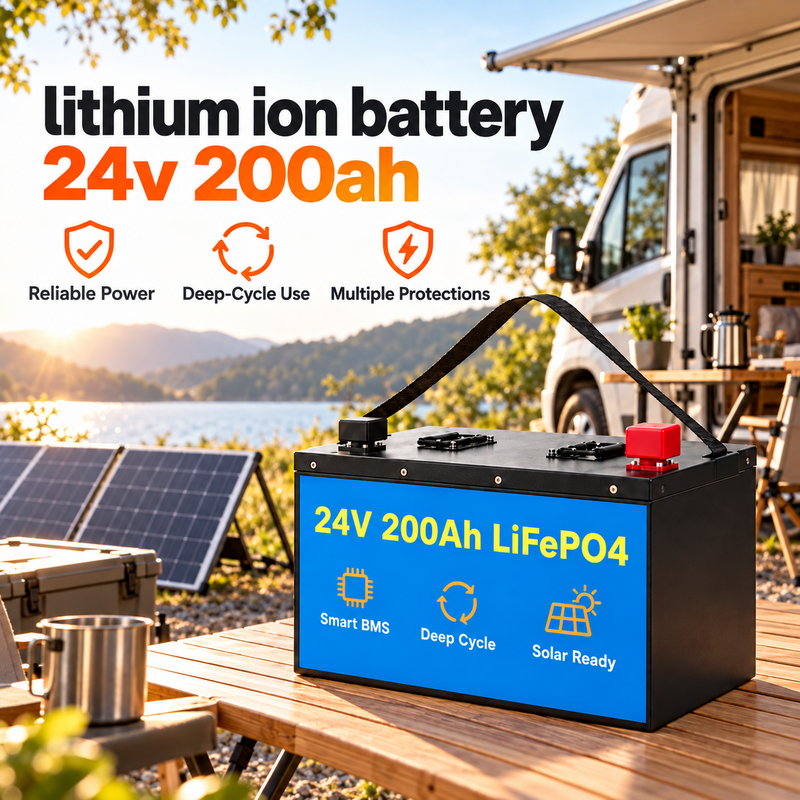
High-Quality 24V 200Ah Lithium Ion Batteries

5,000+ units ready stock, 1–5 days fast global delivery

application/lithium-ion-battery-24v-200ah, application/lithium-ion-battery-24v-200ah, 
Inquiry
Inquiry

lithium ion battery 24v 200ah

In the realm  of energy storage solutions, the 24V 200Ah  lithium-ion battery stands out  for its  efficiency and versatility, especially in applications  such as solar energy systems,  recreational vehicles  (RVs),  uninterruptible power  supplies (UPS), and marine applications. Buyers often seek high-performance batteries that  meet specific  technical  requirements while  ensuring reliability and longevity. This article will help purchasing  managers and engineers  understand where to source these  batteries, evaluate their  specifications,  assess quality, consider  cost factors, and troubleshoot common issues.

 
Specifications You Need to Know for 24V 200Ah Lithium Ion Batteries

Specifications You Need to Know for 24V 200Ah Lithium Ion Batteries

Understanding the specifications of 24V 200Ah lithium-ion batteries is essential for ensuring they meet application requirements. Key specifications  to consider include:

Nominal Voltage: The nominal voltage is typically 24V,  suitable for various applications, but  it’s essential to verify this aligns with your system's requirements. Capacity: The 200Ah  rating indicates the total energy the battery can store and deliver. This capacity is critical for applications requiring sustained  power over extended periods. Cycle Life: This refers to the number  of complete charge and discharge cycles a battery can undergo before its capacity significantly diminishes. A longer  cycle life  translates to better longevity and cost-effectiveness. Discharge Rate: This indicates how quickly the battery can deliver power.  Ensure that  the discharge rate meets the demands of your application,  particularly for  high-drain scenarios. Temperature Range: Lithium-ion  batteries  perform optimally within specified  temperature  ranges. Understanding these  limits is crucial  for applications in extreme  environments.

Buyers should confirm these specifications with potential suppliers, as they can impact overall performance and compatibility  with existing systems.

How to Evaluate the Quality of 24V 200Ah Lithium Ion Batteries

Quality evaluation of 24V 200Ah lithium-ion batteries is vital to ensure  reliability and safety. Here are  several factors to consider: 

  Materials and Construction: High-quality lithium-ion batteries  are typically constructed using advanced  materials  that enhance  performance and safety. Ensure that the battery uses LiFePO4 chemistry, known for its stability and safety compared to other lithium-ion variants. Battery Management System (BMS): A robust BMS is  critical for monitoring and managing the battery’s performance,  including charge levels, temperature, and overall health. Verify that  the BMS is independent and  meets industry standards. Testing and Certification: Look for batteries that have undergone rigorous  testing and hold relevant certifications. Compliance with international safety standards  (such as UN38.3 and CE) is  a minimum requirement. Warranty and  Support:  Assess the warranty period offered by the manufacturer. A longer warranty often reflects the  manufacturer's confidence  in their product's durability and performance. Customer Reviews and Case Studies: Investigate the experiences of other users through reviews or case studies. These can provide insights into real-world performance and any potential issues.

Conducting a thorough quality evaluation not only minimizes risks but also ensures  that the battery will perform reliably  in your application.

Cost Factors for Purchasing 24V 200Ah Lithium Ion Batteries in Bulk

The cost of 24V 200Ah lithium-ion batteries can vary significantly based on several factors. Understanding these can help buyers budget effectively: 

Volume Discounts: Purchasing in bulk often leads to significant  discounts. Suppliers may offer tiered  pricing based on quantity, so it’s beneficial to  evaluate your purchasing needs. Customization Options: If your application requires specific features or  modifications, customization can add  to the cost. Discuss these needs with suppliers early  in  the  negotiation process. Shipping and Handling: Consider the cost of shipping, especially for international orders. Factors such as shipping distance, method, and  packaging can affect  overall pricing.  Market Fluctuations: Prices for raw materials, particularly lithium and cobalt, can fluctuate based on global supply and demand.  Staying informed about market trends can aid  in timing  your purchase  for the best pricing. Supplier  Reputation:  Established suppliers may charge a premium for their products due to their reliability and quality assurance processes. This can be worth the investment for peace of mind.

Understanding these cost factors will enable you  to make  a  more informed purchasing decision.

Solutions for Common Problems with 24V 200Ah Lithium Ion Batteries

While 24V 200Ah lithium-ion  batteries are generally reliable, users may encounter common issues. Here are solutions to address them: 

Overheating: If batteries overheat during operation, it could  indicate an  issue with the BMS or environmental conditions.  Ensure proper  ventilation and cooling systems are in place, and verify that the BMS is functioning correctly.  Rapid Discharge: If the battery discharges faster than expected, check for excessive load demands beyond the battery’s rated discharge capacity. Reassess your application’s power requirements and consider  using multiple batteries in parallel for higher capacity. Short  Cycle Life: A shorter-than-expected cycle life can result from improper charging practices. Ensure that the charging system is compatible  with the battery  specifications and that  users are following the recommended charge cycles. BMS Malfunction: If the BMS fails, it can lead to unsafe conditions. Regularly  inspect and maintain the BMS, ensuring firmware is up to date and that all connections are secure. Physical Damage: Inspect batteries for any physical damage during transport and installation. Damaged  batteries should not be used and should be reported to  the supplier immediately for replacement.

Addressing these common problems proactively can enhance the lifespan and  performance of your lithium-ion batteries, ensuring they meet your operational needs effectively. Energy Storage Systems 4.2KW 6.2KW 24V 48V On/Off Grid Solar Inverter Pure Sine Wave Inverter MPPT Hybrid Inverters.

By understanding  the sourcing,  specifications, quality  evaluation, cost factors, and potential problems  associated with 24V  200Ah lithium-ion batteries, purchasing managers and engineers can make informed decisions that align with their operational requirements and business goals.

Where to Source High-Quality 24V 200Ah Lithium Ion Batteries Wholesale

When  sourcing 24V 200Ah lithium-ion batteries, it’s crucial to partner with reputable manufacturers who specialize in energy  storage  systems. Leading suppliers, such as Shenzhen Yanshuosheng Technology Co., Ltd., offer a range of High Performance 50Ah LiFePO4 Lithium Ion Battery Pack Deep Cycle 12V High Efficiency Lithium Iron. Look for  companies that  have established certifications  like  UN38.3 and CE, which affirm compliance with  international  safety  standards. Additionally,  consider suppliers  with  a proven track record in serving  diverse markets, including solar, RV, UPS, and marine applications, as they are more likely to understand the specific needs of various sectors.

It's advisable to request samples or prototypes before committing  to larger orders. This allows  for testing under your actual operating  conditions, ensuring compatibility and performance. Furthermore, a reliable  supplier should provide comprehensive product documentation, including technical specifications, safety data sheets, and warranty information, which can help in  making informed decisions.

Get a Free Quote

Our representative will contact you soon.
0/1000