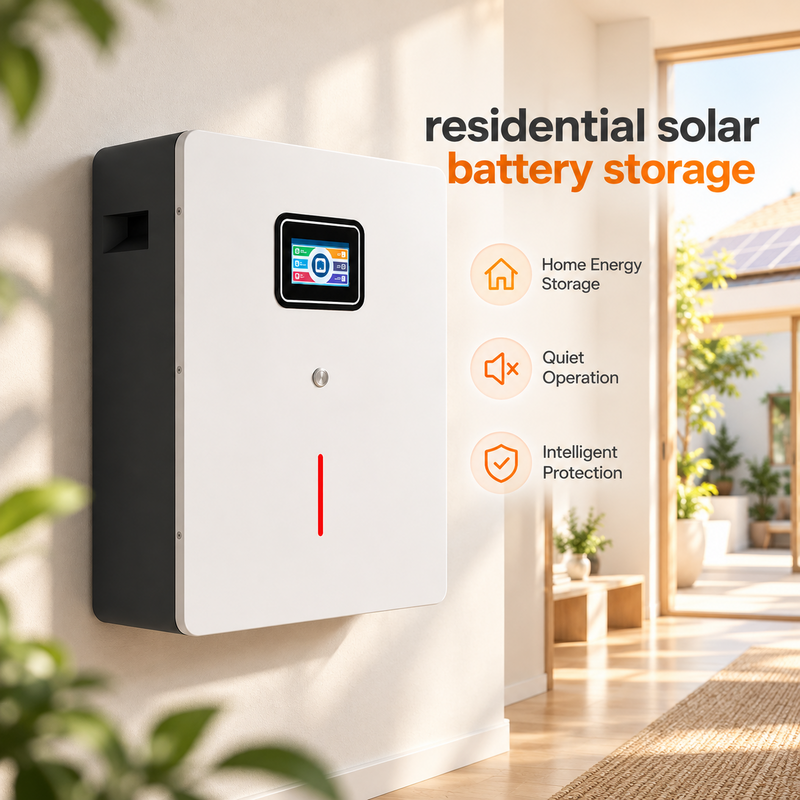
Choosing the Right Residential Solar Battery Storage

5,000+ units ready stock, 1–5 days fast global delivery

application/residential-solar-battery-storage, application/residential-solar-battery-storage, 
Inquiry
Inquiry

residential solar battery storage

Residential solar  battery storage systems  are essential  for homeowners looking to maximize their renewable  energy utilization.  These systems  enable the storage of energy  generated from solar panels  for later  use, ensuring a reliable power supply even during peak demand  periods or outages. For B2B  buyers,  such as  purchasing managers, engineers, and distributors, understanding the nuances of  residential  solar battery storage is  crucial. This article will  explore key considerations for selecting the right battery storage  solutions, comparing options, evaluating specifications, finding reputable suppliers, and addressing common issues that  may  arise with these systems.

How to Compare Residential Solar Battery Storage Options Effectively

How to Compare Residential Solar Battery Storage Options Effectively

Comparing  residential  solar battery storage options requires a  systematic approach. Start by examining the  specifications of each  product, focusing on capacity (measured in kilowatt-hours, kWh), discharge  rates, and warranty terms. A battery with a higher capacity is generally more desirable, provided it meets the household's energy demands.

Next,  consider the battery's efficiency ratings. Round-trip efficiency indicates how much energy is lost during storage and retrieval. A higher percentage means less energy waste  and lower operational costs. Additionally,  it’s important to review the battery's lifespan, measured in cycles. A product with a high cycle count may offer better long-term value.

Price is another critical comparison factor. However, it’s vital to understand the total cost  of ownership,  which includes installation, maintenance, and  potential replacement  costs over  time. Do not overlook customer reviews  and ratings, as they  provide insights into the real-world performance  and reliability of the battery systems.

Lastly, consider the manufacturer's reputation and service support. A supplier  with a proven track record in the industry, such as Shenzhen Yanshuosheng Technology Co., Ltd., can provide peace of mind regarding product  quality and  after-sales service.

Key Specifications to Evaluate in Solar Battery Storage Solutions

Several key specifications must be evaluated when selecting a solar battery storage  solution:

Capacity: Measured in kilowatt-hours (kWh), this indicates  the total amount of energy  the battery can  store. Choose a capacity that aligns with your energy consumption patterns.

Depth of Discharge (DoD): This percentage indicates  how much of the battery’s capacity can be used.  A higher DoD allows more energy utilization without damaging the battery.

Round-Trip  Efficiency: This metric reflects how effectively the battery can store and  release energy. Higher efficiency means lower energy  loss.

Lifespan and Cycles: Evaluate how many charge and discharge cycles the battery can handle  before its capacity diminishes significantly.  This impacts  the long-term value of the investment.

Weight and  Size: These factors affect installation requirements  and space considerations. Ensure the selected battery fits within  the designated installation area.

Warranty Terms: A longer warranty typically  indicates manufacturer confidence in the product's durability and performance.

Safety  Certifications: Ensure the  product has relevant  safety certifications, such as UN38.3 and CE, indicating compliance with international safety standards.

By closely examining these specifications, buyers can make informed decisions that meet their  energy storage needs effectively.

Where to Find Reliable Suppliers of Solar Battery Storage Systems

Finding  reliable suppliers of solar battery storage  systems involves researching  manufacturers with a strong industry presence and proven track records. Start by  exploring industry directories and  trade shows, where many  reputable  manufacturers showcase their products. Online platforms and marketplaces can  also provide insights through user  reviews  and ratings.

Look for suppliers who offer comprehensive solutions, including pre-sales consultations and  after-sales support. Companies like Shenzhen Yanshuosheng  Technology Co., Ltd. are examples of manufacturers that provide extensive product information and customer service, which is crucial for  B2B buyers seeking  long-term partnerships.


Additionally, reach out to industry peers for recommendations and  insights. Networking within industry forums or attending relevant  conferences can also facilitate connections  with trustworthy suppliers. Always verify the supplier’s credentials,  manufacturing capabilities,  and customer service reputation before making a purchase.

Common Problems with Solar Battery Storage and Their Solutions

While residential solar battery storage systems offer numerous  benefits, they can also present challenges. Here are some common issues and  their solutions:

Battery Degradation: Over time, batteries lose capacity due to repeated charge and discharge cycles.  To mitigate this, choose high-quality LiFePO4 batteries, which have a longer lifespan  and better performance over time.

Compatibility Issues: Sometimes, batteries may not integrate well with existing  solar inverters or home energy management systems. Before  purchasing, confirm compatibility with all components, and consult  with the  supplier for  advice on system integration.

Performance  Under Extreme Conditions: Batteries can be sensitive to temperature fluctuations. Ensure that installation conditions are optimal, and consider  thermal  management solutions if necessary.

Installation Challenges:  Improper installation can lead to performance issues. It is advisable to  hire certified professionals for installation, ensuring that  all safety and operational guidelines are followed.

Maintenance Needs: Some batteries may require regular maintenance to ensure optimal performance. Familiarize yourself with the  maintenance requirements of your selected system and schedule  regular checks.


By anticipating these common problems and implementing solutions, buyers can enhance the  reliability and longevity of their solar battery storage systems, ultimately maximizing  their investment in renewable energy.

Choosing the Right Residential Solar Battery Storage for Your Needs

When selecting a residential solar battery storage system, buyers must first assess their specific energy  needs. Considerations include the total energy consumption  of the household, the peak demand times,  and the capacity of the installed  solar  panels. The  battery  system should ideally  have a capacity that aligns with the energy  usage patterns, allowing homeowners to store  excess energy produced during the day for use at night or during cloudy days.

Another essential factor is the battery technology. Lithium Iron Phosphate (LiFePO4) batteries, like those offered by Shenzhen Yanshuosheng Technology Co., Ltd.,  provide several advantages,  including longer life  cycles,  better thermal stability,  and safety compared to traditional lead-acid batteries. Additionally, consider the depth of discharge (DoD) and round-trip efficiency, as these metrics indicate how much stored energy can be effectively used.

Buyers should also evaluate the compatibility of the battery system with existing solar inverters and  the overall  electrical setup  of the home. This ensures seamless operation and  maximizes the benefits of the solar energy system.


Get a Free Quote

Our representative will contact you soon.
0/1000