Solar Battery Backup Options for Wholesale Buyers

5,000+ units ready stock, 1–5 days fast global delivery

application/solar-battery-backup-for-home, application/solar-battery-backup-for-home, 
Inquiry
Inquiry

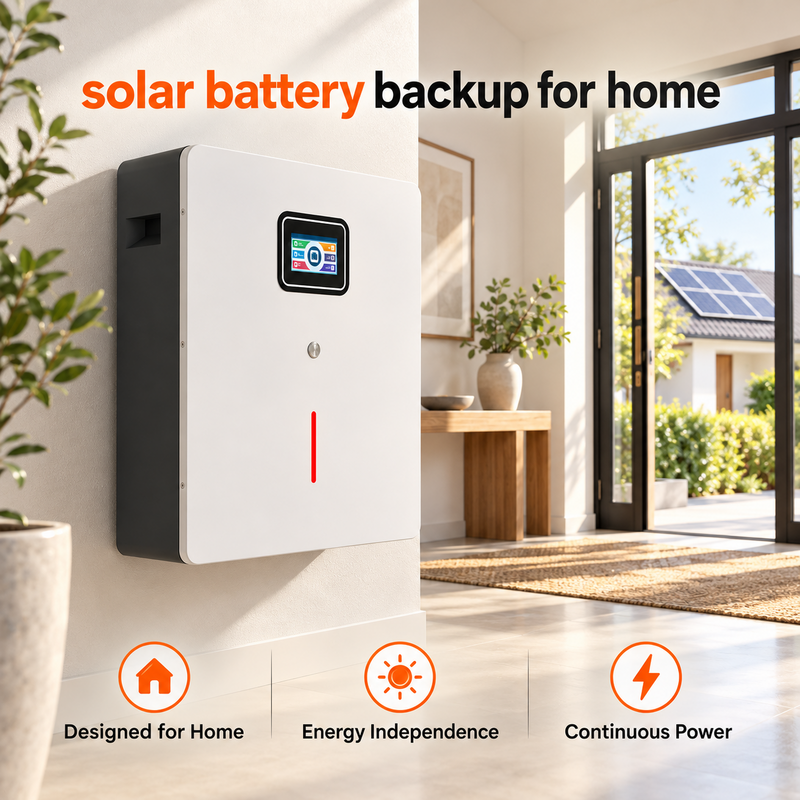
solar battery backup for home

Solar battery backup systems for homes are becoming increasingly essential for  homeowners seeking energy independence and reliability. These systems store energy  generated  from solar panels  to power homes during outages or at night,  helping  to reduce dependence on the grid. However,  for businesses involved  in the wholesale distribution  of these systems, understanding  the  nuances of solar battery  backup options is  critical. This article  will guide purchasing managers,  distributors,  and engineers  through the  essential considerations when selecting solar battery  backup  solutions, focusing on LiFePO4 technologies.

Finding Trusted Sources for Battery Backup

Finding Trusted Sources for Battery Backup

Identifying reliable suppliers for  solar battery backup systems is critical for wholesale buyers.  Start  by researching manufacturers with a proven track record in the industry,  such as those specializing in LiFePO4 energy storage  systems. Look for companies  that have established quality control  processes and possess relevant certifications that validate  their  product  safety and performance.

Networking within industry associations and  attending trade shows can also provide valuable insights  into reputable  manufacturers. Engaging with suppliers directly to ask about their production capabilities, quality assurance protocols, and  client references can further solidify trust.

Additionally, consider sourcing from companies that offer customization options to meet specific client needs, such  as tailored energy  storage solutions or  specific packaging requirements. This flexibility can enhance your  offerings and  cater to  a broader range of customers.

Common Problems with Solar Battery Backup and Effective Solutions

Solar battery backup  systems, while generally reliable, can encounter certain  issues that affect performance. One  common problem is insufficient battery  capacity  to meet energy demands during peak  usage times. This can often  be mitigated by accurately assessing the energy consumption patterns of the household and ensuring that  the battery capacity aligns with those needs.

Another issue  is battery degradation over time, which can be  influenced by factors such as temperature extremes and improper charging cycles. To combat this, ensure that the batteries are installed  in an environment with  controlled temperatures and utilize a BMS that optimizes charging processes.

Additionally, manufacturers can encounter  challenges related to supply chain  disruptions, impacting lead times on  battery shipments.  Establishing strong relationships with suppliers  and having contingency plans  in  place can help manage these  risks effectively.

Material Advantages of LiFePO4 in Solar Battery Backup Solutions

LiFePO4 (Lithium Iron Phosphate)  batteries  offer several advantages that make them  ideal for solar battery backup applications. One of  their most significant benefits is safety;  LiFePO4 batteries are less prone to thermal runaway compared  to other lithium-ion batteries, making them a safer choice for  residential and commercial environments.

Furthermore, LiFePO4 batteries have a longer cycle life, often exceeding 2,000 cycles at 80% depth  of discharge. This long  lifespan translates to  lower replacement costs and  reduced  environmental impact over  time.  The stability of LiFePO4 also  means better performance in high-temperature conditions, which is crucial for installations in  hotter climates.


In terms of efficiency,  these batteries maintain a high discharge rate, ensuring that they can deliver power quickly when needed. This  is particularly important for  applications that require immediate energy supply during outages.

Wholesale Purchasing Tips for Solar Battery Backup Products

When preparing to purchase solar battery backup products in bulk, several essential tips can streamline  the process. First, clarify the specifications required  for your clients, including capacity, dimensions, and compatibility with existing solar systems.  Providing this information  during the RFQ process will help suppliers deliver accurate quotes.

Next, inquire about the minimum order quantities (MOQ) and lead  times  for production and delivery. Understanding these factors can  help you manage client expectations and plan inventory  accordingly.

It’s also wise to request product samples before placing  a  large  order. Testing samples under actual operating conditions can reveal potential issues that may not be apparent from  specifications alone. Additionally, ensure that you familiarize yourself with the packaging methods used by  the  manufacturer, as this can influence shipping costs  and product integrity during transit.

Finally, establish a clear communication channel with your suppliers  to address  any concerns that may arise  during the procurement  process. This proactive approach can help foster a strong business relationship and facilitate smoother transactions.


How to Compare Solar Battery Backup Options for Wholesale Orders

When assessing solar  battery backup solutions for wholesale procurement, there are several  key factors to consider. First, evaluate  the energy  storage capacity of each option, typically measured in kilowatt-hours (kWh). This specification  indicates how much energy the  battery can store and deliver, impacting  its suitability for various applications.

Next, consider the battery chemistry. LiFePO4 batteries, such as those produced by Shenzhen Yanshuosheng  Technology  Co., Ltd., are known for their longevity and thermal stability compared to other lithium-ion chemistries. This translates into longer cycle life and increased safety, which are essential for  both residential and commercial  applications.

Additionally, pay attention to the battery management system (BMS). A robust BMS ensures optimal performance by  monitoring battery health, managing  charge cycles, and preventing overcharging or  deep discharge,  which can significantly shorten battery life. For wholesale orders, it's also crucial to confirm certifications like UN38.3  and CE, which demonstrate compliance with  safety standards.

Lastly, consider the total cost of ownership, including initial purchase price, installation costs, maintenance requirements, and anticipated  lifespan. Evaluating these factors will help ensure  that you select the most suitable solar battery backup  options for your business customers.

Get a Free Quote

Our representative will contact you soon.
0/1000