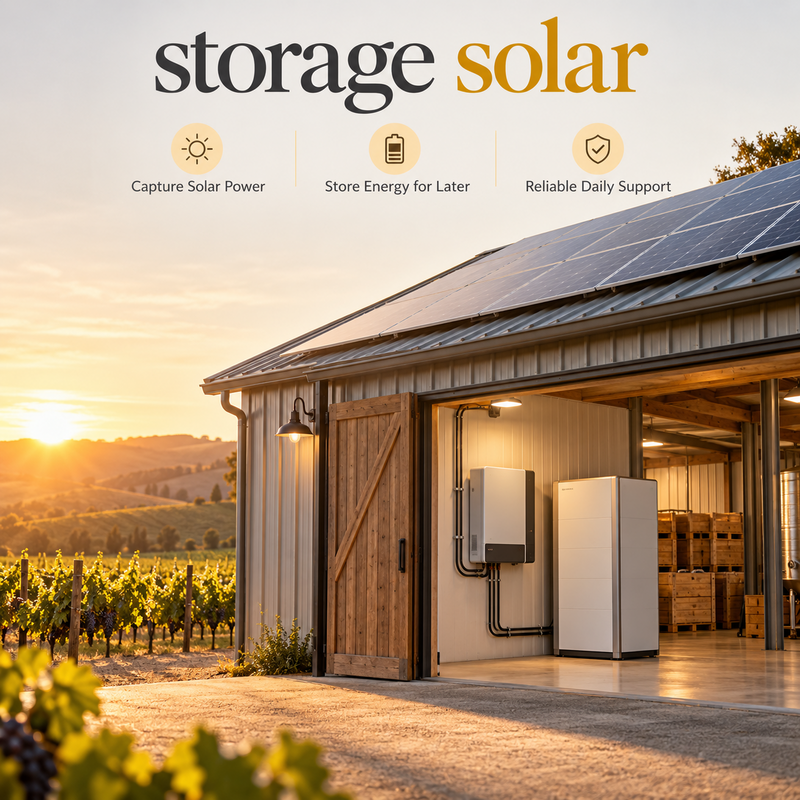
Key Specifications for Storage Solar Systems

5,000+ units ready stock, 1–5 days fast global delivery

application/storage-solar, application/storage-solar, 
Inquiry
Inquiry

storage solar

Storage  solar systems have become an essential part  of modern energy solutions,  especially as  industries and  consumers  alike seek  more  sustainable power options. These systems, particularly those  utilizing LiFePO4 technology,  offer  reliable energy  storage for  solar applications, including residential, commercial, and industrial settings.  This article will address key considerations  for sourcing storage solar systems, including specifications, quality evaluation,  installation guidance, common issues,  and various applications  across  different sectors.

 
Evaluating the Quality of Storage Solar Batteries for Bulk Orders

Evaluating the Quality of Storage Solar Batteries for Bulk Orders

Quality  evaluation is critical  when considering bulk orders of storage solar batteries. Here  are practical steps to ensure  you  are sourcing high-quality products:

Sample Testing: Before placing a  large order, request samples to test under  real-world conditions.  Check for performance metrics such as cycle life, efficiency, and safety features during these tests.

Supplier  Reputation:  Research the  manufacturer’s track record and customer reviews. A reputable supplier like Shenzhen Yanshuosheng Technology Co., Ltd. with independent BMS and certifications indicates reliability and experience in the field. For example, consider products like High Performance 50Ah LiFePO4 Lithium Ion Battery Pack Deep Cycle 12V High Efficiency Lithium Iron for reliable options.

Quality Control Processes:  Inquire about the manufacturer's quality assurance processes. Look for details on how they conduct inspections, testing, and compliance checks throughout the production cycle.


Material Quality:  Ensure that the batteries are made from high-grade materials that meet safety and performance standards. This is  particularly  important for LiFePO4 batteries, which should  feature robust internal structures to minimize risks.

Warranty and Support: Check  the warranty period and the supplier’s support services. A strong warranty can be a good indicator of a  manufacturer’s confidence in their product quality.

By focusing  on these evaluation criteria, you can make informed decisions when sourcing storage solar batteries in bulk.

Installation Guidance for Optimal Performance of Storage Solar Systems

Proper installation of  storage solar systems is crucial for achieving optimal performance. Here  are  key considerations for installation:

Location:  Choose a location  that is dry, well-ventilated, and protected from  extreme temperatures. High temperatures can affect battery  performance  and  lifespan, so maintaining a stable environment is essential.

Electrical Compatibility: Ensure that the  storage system  is compatible with existing solar panels, inverters, and other electrical components. Mismatched  systems can lead  to inefficiencies or potential hazards.

Safety Protocols: Follow all safety guidelines  during installation. This includes using proper protective equipment and ensuring that all electrical connections are secure to prevent short circuits or other risks.

Commissioning: After  installation, perform a  commissioning process to test the system’s functionality. This includes checking charge and discharge cycles, monitoring system performance, and ensuring that all components are operating correctly.

Maintenance Planning: Develop a maintenance schedule for regular inspections and servicing. Routine checks can  help identify issues early and prolong the system's lifespan.

Following these installation guidelines  will  help ensure that your storage  solar system operates effectively and efficiently.

Common Problems with Storage Solar Systems and Their Solutions

Like any  technology, storage solar systems can  encounter issues. Here are some common problems along with solutions:

Battery Degradation: Over time, batteries can degrade, leading  to  reduced capacity. To mitigate this, avoid deep discharges and maintain optimal operating temperatures.

Inconsistent Performance: Fluctuating performance can occur if the system is not properly calibrated. Regularly  check and adjust settings according  to manufacturer  recommendations to maintain  efficiency.

Overheating: Batteries  can overheat due to excessive charging or environmental factors. Ensure proper ventilation and monitor temperature regularly to prevent  thermal runaway.

Connection Issues:  Loose  or corroded connections can lead  to power loss.  Perform routine inspections of all electrical connections and terminals to ensure they are  clean and secure.

Faulty Inverter:  If the inverter fails, it can disrupt the entire system. Regularly test the inverter  and consider having a  backup to minimize downtime.

By being aware of these common issues  and implementing preventive measures, users can enhance the reliability and longevity of their storage solar  systems.

Applications of Storage Solar in Various Industries and Settings

Storage solar systems have a wide range of applications across multiple industries, enhancing energy efficiency and sustainability. Here are some  notable applications:


Residential Use: Homeowners utilize storage solar systems to store excess energy generated from solar panels, allowing them to use renewable energy during peak hours and reduce  reliance on the  grid. For instance, systems like All-in-One Energy Storage System 3KW / 5KW Hybrid Cabinet for Typical Homes are popular choices.

Commercial and Industrial: Businesses often implement storage solar solutions to manage energy costs, especially during peak demand periods.  This can lead to  significant savings and increase energy independence.

RV and Marine Applications: Storage solar systems are ideal  for recreational  vehicles and marine applications where reliable  power is needed off-grid. The portability and  efficiency of LiFePO4 systems make them suitable for these markets.

Emergency Backup Systems: For critical infrastructure,  such as hospitals and data centers, storage solar systems provide backup power during outages, ensuring  continuity of  operations.

Remote Locations: In areas without reliable grid  access, storage solar systems can provide a sustainable  solution  for powering homes, schools, and businesses, promoting energy equity and sustainability.


By exploring these applications, stakeholders can better understand how storage  solar systems can be  utilized to meet  specific energy needs across various settings.

Key Specifications to Consider When Sourcing Storage Solar Systems

When sourcing storage solar systems, several key specifications are vital to ensure optimal performance and compatibility with  your application:

Battery Chemistry: LiFePO4 (Lithium Iron Phosphate) batteries are favored for their thermal stability and long  cycle life, typically offering over  2000 cycles at  80% depth of discharge. Understanding the chemistry is crucial since it affects safety,  longevity, and performance.

Capacity and Power Rating: Evaluate  the system's energy  capacity (measured in kilowatt-hours, kWh) and power output (in  kilowatts, kW). The capacity should match your energy  needs, while the power rating impacts how quickly you can draw energy from the system.

Depth of Discharge (DoD): This  is the percentage of the battery that can be  used. For example, a DoD of 80% means you can use 80% of the battery's total capacity. Systems with higher DoD values provide more usable energy.

Round-Trip Efficiency:  This metric indicates how much energy is lost  during storage and retrieval. A higher efficiency (typically above 90%) means less energy is wasted, which is important for cost-effectiveness in commercial applications.

Certifications: Ensure that the storage system has relevant certifications such as UN38.3 for transportation safety and  CE  marking for compliance with European standards.  These certifications assure  buyers of the product's safety and quality.

Understanding these specifications can help ensure that the storage solar  system meets  your specific  energy requirements while providing reliability and efficiency.

Get a Free Quote

Our representative will contact you soon.
0/1000