Home Solar Power Battery Systems: Quality & Sourcing

5,000+ units ready stock, 1–5 days fast global delivery

application/home-solar-power-battery-system, application/home-solar-power-battery-system, 
Inquiry
Inquiry

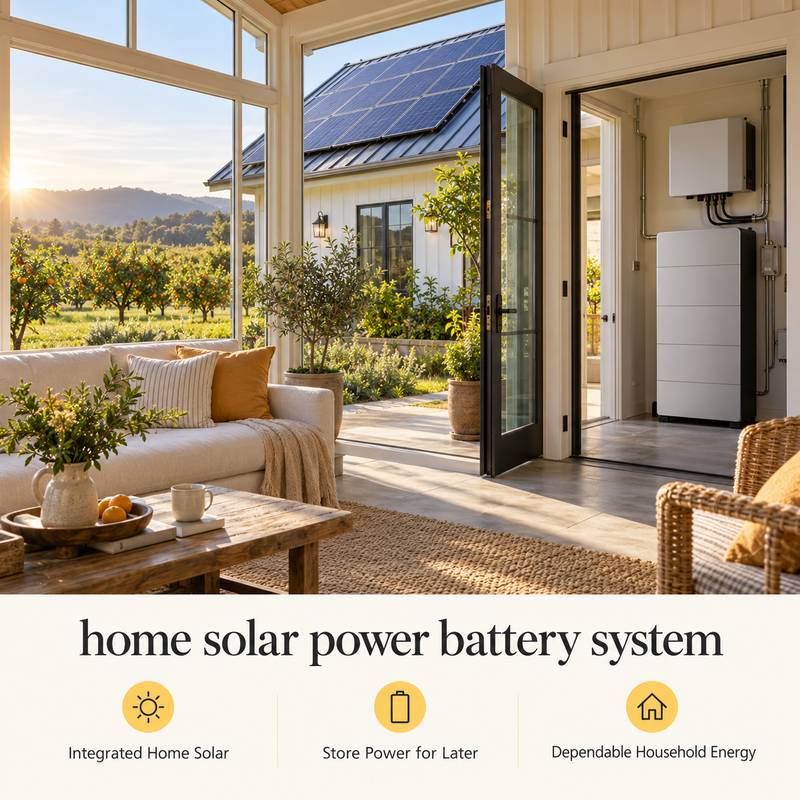
home solar power battery system

Home solar power battery systems are  becoming increasingly essential for residential  energy solutions,  particularly  as  more homeowners look to harness renewable energy sources.  These systems  store energy generated from solar panels, allowing for greater energy independence and efficiency. B2B buyers, such  as  purchasing managers and distributors,  often face key concerns, including product  reliability, cost-effectiveness, and supplier trustworthiness. This  article will delve into the  quality evaluation  of  home solar power battery systems, common issues  and  solutions, sourcing reliable suppliers, cost  factors, and  the  various applications of these systems.

Common Problems with Home Solar Power Battery Systems and Solutions

Common Problems with Home Solar Power Battery Systems and Solutions

Home solar  power battery systems can encounter several common problems. One frequent  issue is insufficient battery capacity, which can  lead to energy shortages during peak usage times. To mitigate this, buyers should assess their energy consumption patterns and select a system with adequate capacity to meet their needs, ideally  with  a buffer for unexpected demand.


Another common problem is battery degradation over time. Factors  such as excessive heat, deep discharges, and improper charging cycles can accelerate this process. To  combat  this, it’s essential  to ensure that  the  BMS is functioning correctly and  to follow the manufacturer's guidelines for charging and discharging  cycles.

Additionally, installation errors  can  lead to performance issues. Buyers should confirm that installation is performed by  qualified technicians familiar with the specific requirements of solar power battery systems. This can significantly reduce  the  risk of operational failures.


Where to Source Reliable Suppliers for Solar Power Battery Systems

Finding reliable suppliers  for  home solar power battery systems  requires careful consideration. Start by researching manufacturers with a strong presence in  the  industry and  positive reviews  from previous customers.  Look for suppliers  like Shenzhen Yanshuosheng Technology Co., Ltd., known for their extensive export experience and proven track record in supplying quality LiFePO4 energy storage systems.

Networking within industry forums and trade  shows can also  yield valuable supplier leads. Engaging with other businesses  in the solar energy sector can provide insights into reputable suppliers and their product offerings.

When evaluating potential suppliers, consider their certifications, production capabilities, and customer service  approach.  It’s beneficial to request samples or detailed  product specifications to assess quality  before placing larger orders. A transparent communication channel with the supplier  can help address any  concerns or questions  that arise  during the evaluation process.

Cost Factors to Consider for Home Solar Power Battery Systems

The cost of home solar power battery systems can vary  widely based on several  factors. One of the most significant considerations is  the type  of  battery technology employed. LiFePO4 batteries may have a  higher  upfront cost compared to other lithium-ion options, but their longevity and safety features often lead to lower total cost of  ownership  over time.

Additionally, the capacity of the battery system plays a vital  role in pricing. Systems designed for larger homes or higher energy demands will naturally  be more expensive. Buyers should  evaluate their energy needs to determine the most  cost-effective solution.

Installation costs are another important factor. Complex installations  or additional equipment may increase overall expenses, so it’s advisable to obtain detailed quotes from potential installers. Make sure to  inquire about warranties and service agreements, as these can also affect long-term costs.

Lastly,  financing options can impact the apparent cost of  the system. Many suppliers offer financing plans that allow for  manageable monthly payments  instead of a large upfront investment, making solar  battery systems more accessible.

Understanding the Applications of Home Solar Power Battery Systems

Home solar power battery systems have a variety  of  applications  that extend beyond simple electricity storage.  They can be  integrated into residential  solar  panel systems to provide backup power during outages, enhancing energy  security for homeowners.

These systems are also  increasingly  utilized for off-grid applications,  such as  in recreational vehicles (RVs) and marine settings, where reliable power supply is crucial. Batteries can support appliances and electronics, making them essential for a comfortable and  functional living  environment.

In addition, home solar power battery systems can be used in conjunction with smart home technologies. This integration  allows for real-time energy monitoring and management, enabling homeowners to optimize their energy usage and reduce costs.

Understanding these  applications can help  buyers make informed decisions about the specifications and features they need in a solar power  battery system, ensuring it meets their operational  requirements effectively.


Evaluate the Quality of Home Solar Power Battery Systems

When  evaluating the quality of home solar  power  battery systems, several key specifications must be considered. First, look for  batteries constructed with LiFePO4 (Lithium Iron Phosphate) technology, known for its safety, thermal stability, and long cycle life. A quality  system should also include an independent Battery Management System  (BMS),  which is crucial for monitoring battery health,  ensuring safe  operation, and optimizing performance.

The certifications of a battery system are equally important. Ensure that the  products are certified under relevant  standards such as UN38.3 for transport safety and CE for European market compliance. These certifications indicate that the product has undergone rigorous testing and meets industry standards, which can significantly reduce the risk associated with manufacturing defects.

Additionally, consider the production capabilities of the manufacturer. A  reliable producer like Shenzhen Yanshuosheng Technology Co., Ltd. should have robust quality control processes  in place,  ensuring consistent performance  across batches. Effective quality inspection practices  can help identify defects early, preventing  potential issues  during installation  or  operation.

Get a Free Quote

Our representative will contact you soon.
0/1000