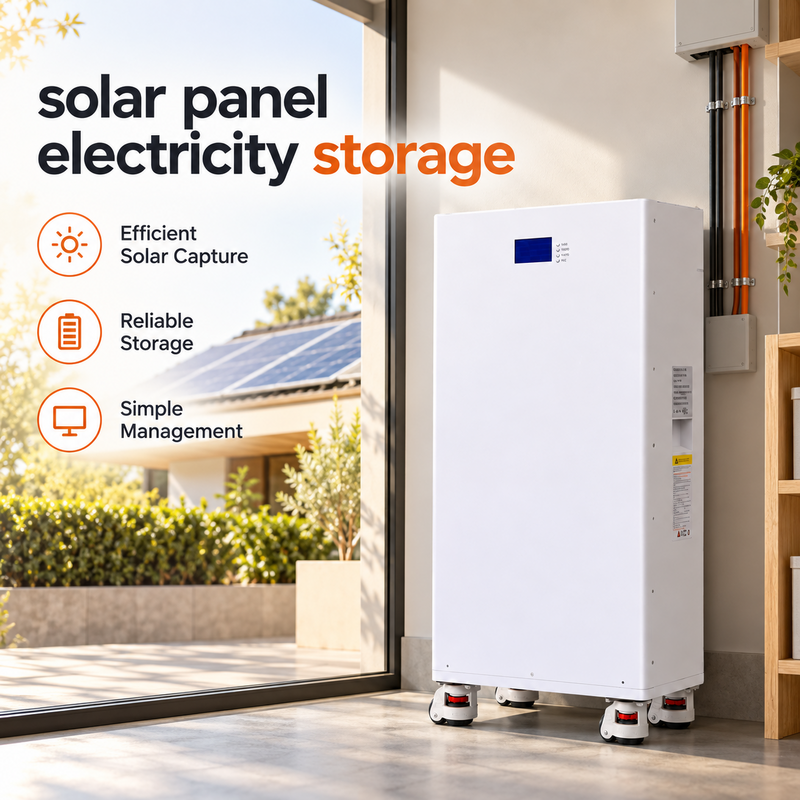
Evaluating Solar Panel Electricity Storage Systems

5,000+ units ready stock, 1–5 days fast global delivery

application/solar-panel-electricity-storage, application/solar-panel-electricity-storage, 
Inquiry
Inquiry

solar panel electricity storage

In the realm of renewable energy, solar panel electricity storage systems have gained significant  traction, especially with the  increasing demand for  sustainable solutions. These systems, particularly those  utilizing  LiFePO4 technology, are crucial for  efficiently storing energy generated  from solar panels. For B2B buyers,  understanding  the  nuances of solar electricity storage is  essential, as  it directly impacts operational efficiency, cost-effectiveness,  and product  reliability. This article  will  guide purchasing managers and  engineers through the key considerations in evaluating LiFePO4 energy storage  systems, sourcing suppliers, understanding  cost factors,  troubleshooting common issues, and exploring various applications.

Where to Source Reliable Suppliers for Solar Electricity Storage

Where to Source Reliable Suppliers for Solar Electricity Storage

Sourcing reliable suppliers for solar panel electricity  storage  systems involves several key strategies. First, attending industry trade shows  and conferences can provide insights into the latest products and allow buyers to meet manufacturers face-to-face. This  personal  interaction can help  establish trust and facilitate better communication  regarding specifications and requirements.

Online platforms and  industry directories can also be valuable resources. Websites that specialize in the solar energy sector  can connect  buyers with reputable suppliers. When evaluating potential suppliers, it’s essential  to  review their track record, customer testimonials,  and any case  studies highlighting their experience in providing energy storage solutions.

Engaging with industry forums and networks can provide additional insights. Participating in discussions can  help  identify which suppliers are  known for  their quality and reliability. Additionally, it’s beneficial to request  references from  potential suppliers to assess their service quality and responsiveness.

Cost Factors to Consider for Solar Panel Electricity Storage Systems

The  cost of solar panel electricity storage systems can vary significantly based  on several  factors. Initial purchase price is just one aspect;  total cost of ownership includes installation, maintenance, and potential replacement costs over the lifespan of the system.


When calculating costs, buyers should consider the energy capacity of the storage system, typically  measured  in kilowatt-hours (kWh). Higher capacity systems may  have a higher upfront cost but can offer  better long-term  savings through  energy independence and reduced electricity bills.

Customization options can also  affect pricing. For instance, if a buyer requires specific dimensions or features tailored to their application, this may increase costs.  It's crucial to balance  these custom requirements  with budget constraints  while ensuring  that the essential  performance characteristics are not compromised.

Finally, consider the warranty offered by the manufacturer. Extended warranties may indicate greater confidence  in product reliability, potentially saving costs on replacements  in the long run.

Common Problems with Solar Electricity Storage and Their Solutions

While solar electricity storage systems are generally reliable, several common issues can arise. One frequent problem is battery degradation, which can lead to reduced performance and capacity. This issue is often mitigated by ensuring  proper installation and regular maintenance checks. Buyers should verify  that  their supplier provides guidelines for optimal operating conditions to prolong battery life.

Another concern  is thermal management.  Batteries can overheat if not adequately  ventilated, leading to  safety risks and performance drops. Solutions include ensuring  that the  installation site has proper airflow  and utilizing battery cooling systems if  necessary.

Lastly, compatibility issues can arise with existing  solar panel systems.  Buyers  should confirm that the energy storage system they select is compatible with their solar technology to avoid  integration  issues. Engaging with suppliers  who offer technical support can ease the troubleshooting  process  and ensure  smooth operation.

Understanding the Applications of Solar Panel Electricity Storage Systems

Solar panel electricity storage systems, particularly  those based on LiFePO4 technology, have a wide range of applications across various sectors. In residential  settings, they can provide homeowners with  energy independence by storing excess solar energy  for use during peak hours or outages.

In commercial applications, these systems serve critical functions in  reducing energy costs and enhancing operational efficiency. Businesses can  utilize stored energy to  offset demand charges,  leading to significant savings on their electricity bills. Moreover, they can serve as backup power solutions for essential operations during grid outages.

Further, industries such as RV and marine applications  benefit from compact  and durable energy storage solutions. Here,  the lightweight  nature of LiFePO4 batteries and their ability  to operate efficiently in  diverse  environments make them particularly attractive. Buyers should evaluate their specific  application requirements, including space  constraints and energy needs, to select the most  suitable storage solution.

By understanding these  key  factors and considerations surrounding solar panel electricity storage systems, B2B buyers can make informed decisions that align with their operational goals and sustainability initiatives.

How to Evaluate the Quality of LiFePO4 Energy Storage Systems

When assessing LiFePO4 energy storage systems, several critical factors should  be evaluated to ensure  quality and performance. The first is the Battery Management System (BMS), which plays a vital role in monitoring and managing the battery's health and safety. A  robust BMS  can prevent overcharging, overheating, and deep discharging, thereby extending battery life  and performance.

Next, consider the certifications. Systems should comply with international standards  such as UN38.3 for transport safety and CE marking for  product safety  in the European market. These certifications can provide  assurance regarding the product's quality and reliability.

Another important aspect is the cycle life  of the  batteries. A longer cycle life  indicates  a more  durable  product, which translates into lower replacement costs and reduced  downtime for businesses. Typically,  LiFePO4 batteries offer a cycle  life of over 2000 cycles, which is ideal for commercial applications. Buyers should also inquire about the materials used in the battery construction, as  the quality of materials  directly affects performance and safety.

Frequently Asked Questions

What is solar panel electricity storage used for?

It stores solar energy for residential, RV, UPS, and marine use, providing backup power, load shifting, and off-grid operation with our LiFePO4 deep-cycle batteries and integrated BMS.
Yes. Our LiFePO4 systems include independent BMS and hold UN38.3 and CE certifications to ensure safety, cell protection, and compliant transport and market standards.
Designed for deep-cycle use, they offer long cycle life and stable performance. Typical lifespan varies by usage but exceeds lead-acid significantly under normal solar and residential conditions.
Yes. Our storage units are compatible with most solar inverters and systems for residential, RV, UPS, and marine applications; integration assistance is available to ensure proper configuration.
We serve customers in around 50 countries and offer technical support for installation, BMS configuration, and certification guidance to meet local requirements.

Get a Free Quote

Our representative will contact you soon.
0/1000