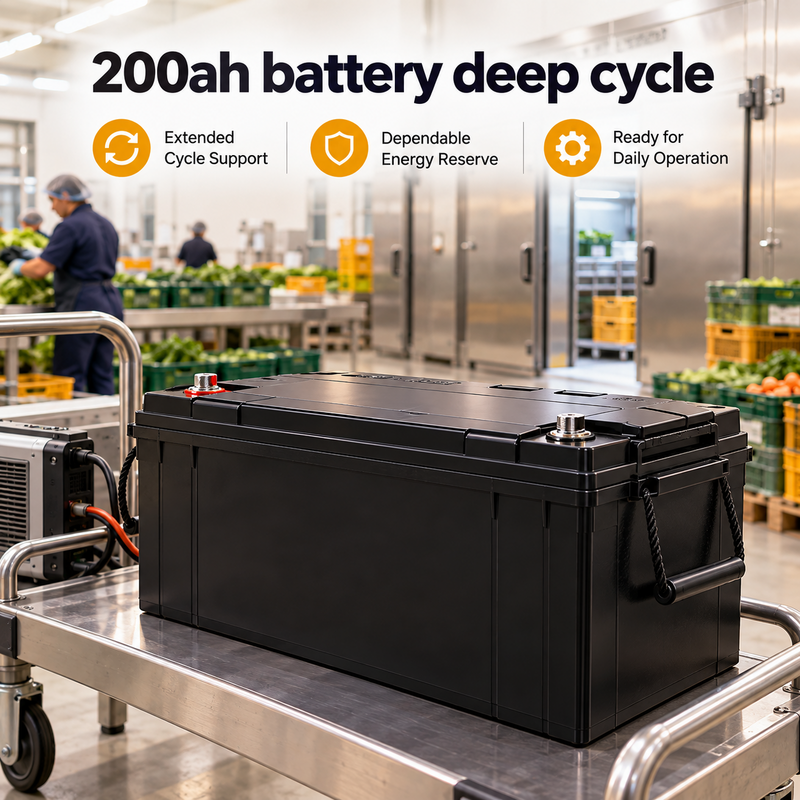
Key Specifications to Evaluate in 200Ah Deep Cycle Batteries
When selecting a 200Ah deep cycle battery, several specifications are critical for ensuring optimal performance and suitability for your application.
Voltage: Most deep cycle batteries are available in 12V, 24V, or 48V configurations. The voltage must match the requirements of the application, as an incorrect voltage can lead to inefficiencies or damage to connected devices.
Cycle Life: This refers to the number of charge-discharge cycles the 200Ah deep cycle battery can undergo before its capacity significantly diminishes. A higher cycle life indicates better longevity, which is crucial for reducing replacement costs over time.
Depth of Discharge (DoD): This specification indicates how much of the battery's capacity can be utilized before recharging. For example, a 200Ah deep cycle battery with an 80% DoD allows for 160Ah of usable power. This is particularly important in applications where consistent energy supply is required.
Weight and Dimensions: The physical size and weight of the 200Ah deep cycle battery affect installation and transportation. Ensure that the chosen 200Ah deep cycle battery fits the designated space and does not exceed weight limits for vehicles or mounting structures.
Internal Resistance: A lower internal resistance results in higher efficiency and better performance during high discharge rates, which is vital in applications like RVs or solar systems where sudden power demands may occur.
Temperature Range: Understanding the operating temperature range is essential for applications in extreme environments. Batteries that can operate effectively in varied temperatures will provide more reliable performance.
Certification: Look for batteries that have certifications like UN38.3 and CE, which indicate compliance with international safety and quality standards.
Evaluating these specifications will help buyers select the most suitable 200Ah deep cycle battery and inverter for their needs, ensuring reliability and performance.
 EN