Choosing the Best 48 Volt Battery and Charger

5,000+ units ready stock, 1–5 days fast global delivery

application/48-volt-battery-and-charger, application/48-volt-battery-and-charger, 
Inquiry
Inquiry

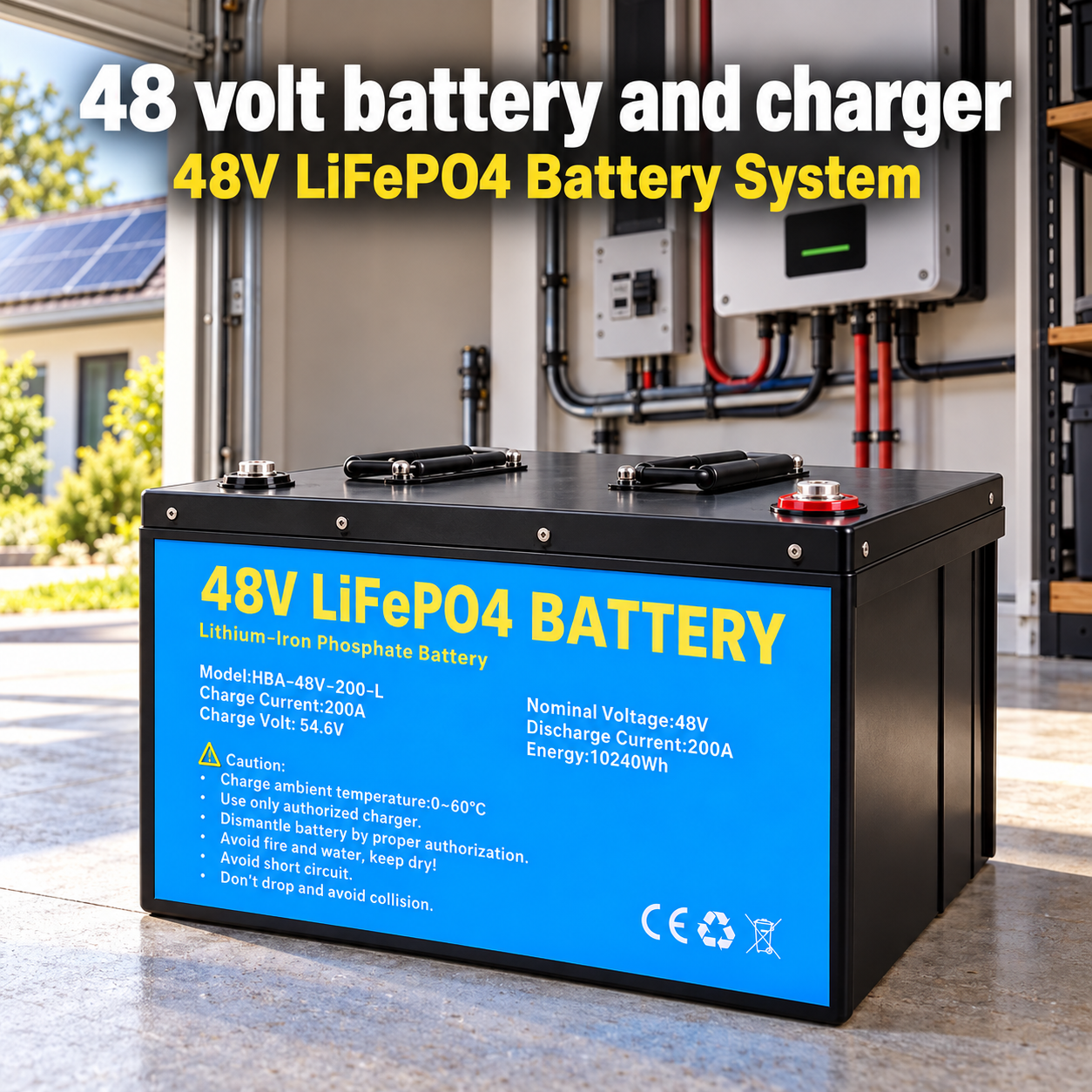
48 volt battery and charger

Selecting the right 48 volt battery and charger is crucial for various applications, including solar, RV, UPS, and marine environments. Buyers often face concerns about compatibility, performance, and overall quality. This article aims to provide insights into choosing the best YANSHUO 48v li ion battery options, ensuring reliability and efficiency in your energy storage systems. 

Where to Find Reliable Suppliers for 48 Volt Battery Solutions

Where to Find Reliable Suppliers for 48 Volt Battery Solutions

Finding a trustworthy supplier for 48 volt battery solutions can significantly impact your project’s success. Start by researching manufacturers with proven expertise in energy storage systems, particularly those specializing in LiFePO4 batteries. Look for suppliers with international certifications like UN38.3 and CE, which indicate adherence to safety and performance standards. 

Another effective strategy is to participate in industry trade shows and exhibitions, where you can meet suppliers face-to-face, inspect products, and discuss your specific requirements. Online platforms, such as industry-specific directories and forums, can also provide valuable insights into reputable suppliers and customer feedback. 

Establishing a good relationship with potential suppliers through clear communication about your needs and expectations can lead to better support and customization options. Inquire about their production capacity, lead times, and quality control processes to ensure they can meet your demands efficiently. 

Key Specifications to Consider When Selecting 48 Volt Batteries

When evaluating 48 volt batteries, several critical specifications should be taken into account: 

Capacity (Ah): This determines how long the battery can power your application. Calculate your energy requirements to select a battery with an appropriate capacity. 

Cycle Life: The number of charge-discharge cycles a battery can undergo before its capacity significantly diminishes. LiFePO4 batteries typically offer a longer cycle life compared to lead-acid options. 

Charging Voltage: Ensure the charger matches the battery’s specifications, as an incompatible charger can lead to inefficiencies or damage. The typical charging voltage for a YANSHUO 48v lithium battery is around 54.4 volts. 

Discharge Rate: This indicates how quickly the battery can deliver power. Applications with high energy demands may require batteries with higher discharge rates. 

Temperature Range: Consider the operating environment of the battery. Extreme temperatures can affect performance, so select a battery designed to handle your specific conditions. 

Dimensions and Weight: Ensure the battery can be accommodated within your equipment or installation space without compromising functionality. 

By understanding these specifications, you can make informed decisions that align with your operational needs. 

Applications for 48 Volt Batteries in Various Industries

48 volt batteries are versatile and find applications across multiple sectors: 

Solar Energy Systems: In solar power installations, 48 volt batteries store energy generated during the day for use at night or during cloudy periods. Their efficiency and longevity make them ideal for residential storage solutions. 

Recreational Vehicles (RVs): RVs utilize 48 volt batteries to power appliances and lighting. Their lightweight nature and high discharge rates are particularly advantageous in mobile applications. 

Uninterruptible Power Supplies (UPS): In data centers and critical infrastructure, 48 volt batteries provide backup power during outages, ensuring uninterrupted operations. 

Marine Applications: In boats and yachts, these batteries power navigation and communication equipment, offering reliable performance in challenging environments. 

Understanding the specific needs of your industry will help you choose the right battery solution that meets performance and reliability standards. 

Expert Guidance on Sourcing 48 Volt Battery and Charger Products

Sourcing the right 48 volt battery and charger products requires thorough preparation and knowledge. Begin by defining your project’s requirements, including the expected load, duration of use, and environmental conditions.  This information will guide your discussions with suppliers. 

When requesting quotations, provide detailed specifications, including battery capacity, chemistry, dimensions, and any customization needs. This clarity helps suppliers offer the most accurate YANSHUO 48v lifepo4 battery charger pricing and lead times. 

Before finalizing your order, it’s wise to request samples. Testing a sample under actual operating conditions will reveal performance characteristics and potential issues, such as heat dissipation or compatibility with existing systems. 

Don’t overlook the importance of after-sales support and warranty terms. Inquire about the supplier’s processes for addressing defects or failures, as this can significantly impact your operation’s reliability. 

Lastly, be vigilant about quality control. Verify that your chosen supplier follows stringent quality assurance processes to ensure that every battery meets the necessary performance and safety standards. This diligence can prevent costly issues down the line. 

By following these guidelines, you can effectively source reliable 48 volt battery and charger products that align with your operational goals. 

Choosing the Right 48 Volt Battery and Charger for Your Needs

When selecting a 48 volt battery and charger, various factors play a vital role in ensuring you meet your specific application requirements. First, consider the type of battery chemistry, such as LiFePO4 (Lithium Iron Phosphate), which offers enhanced safety, longer cycle life, and better thermal stability compared to traditional lead-acid batteries. The choice of chemistry impacts performance, weight, and overall lifespan. 

Next, evaluate the capacity (measured in amp-hours) to ensure the battery can support your energy needs. A higher capacity means longer usage times, which is particularly important in off-grid applications or during power outages. Additionally, the charger must be compatible with the battery type, ensuring efficient charging without damaging the battery’s cells. 

It’s also critical to assess the battery management system (BMS) integrated into the battery. A quality BMS enhances performance by managing charge cycles, ensuring cell balance, and providing safety features like over-voltage and over-current protection. 

Frequently Asked Questions

What is the 48 volt battery and charger designed for?

Designed for energy storage in solar, RV, UPS, and marine systems using LiFePO4 chemistry and deep-cycle performance for reliable off-grid or backup power.
The battery and charger meet UN38.3 and CE certifications and include an independent BMS for safety and compliance.
LiFePO4 chemistry offers long life: typically 2000–5000 cycles depending on depth of discharge and operating conditions.
Yes. The charger is compatible with common solar charge controllers and system setups; configuration may be required for optimal charging profiles.
We offer technical support, installation guidance, and warranty terms. Contact us for specific warranty duration and service details.

Get a Free Quote

Our representative will contact you soon.
0/1000